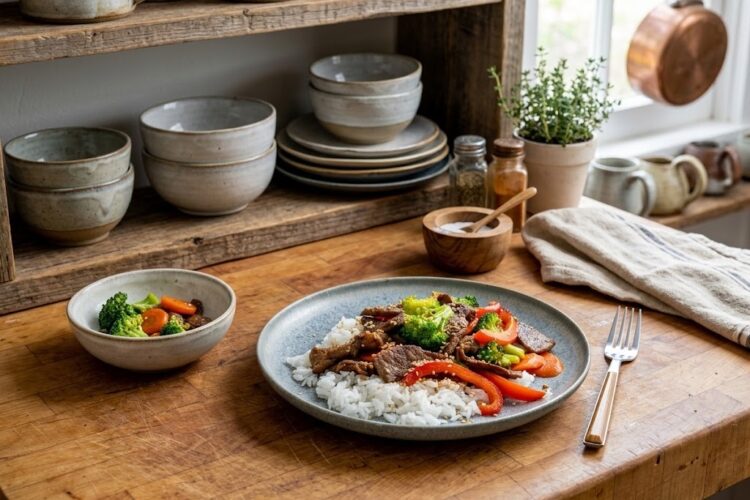
A quick beef stir-fry is one of the best choices when you need a fast, satisfying, and flavorful dinner without spending a long time in the kitchen. This easy beef stir-fry recipe combines tender strips of beef with fresh broccoli, red bell pepper, carrots, green onion, garlic, soy sauce, and toasted sesame seeds.
The result is a colorful, protein-rich meal that can be prepared in only 25 minutes, making it an excellent option for busy weeknights, simple family dinners, or a last-minute homemade meal.
One of the biggest advantages of making homemade beef stir-fry is its flexibility. The recipe uses simple ingredients that are easy to find, while the cooking method allows the beef and vegetables to retain their individual textures and flavors.
The beef develops a rich browned exterior, while the vegetables remain bright and lightly crisp. Combined with the savory flavor of soy sauce and the nutty finish of toasted sesame seeds, this quick stir-fry delivers the kind of satisfying taste often associated with restaurant-style Asian-inspired meals.
Why This Quick Beef Stir-Fry Recipe Works So Well
The popularity of beef stir-fry comes from its combination of speed, simplicity, and versatility. Unlike slow-cooked beef dishes that require extended cooking times, stir-frying uses high heat to cook thin strips of meat quickly. This allows the beef to brown while remaining tender when prepared correctly.
The vegetables are also cooked briefly, helping them maintain their natural color and a pleasant texture instead of becoming overly soft.
Another reason this recipe works well is the straightforward ingredient list. There is no complicated marinade or lengthy preparation process. Vegetable oil provides the cooking base, while soy sauce adds a salty, savory element that brings the beef and vegetables together.
Garlic adds depth and aroma, and toasted sesame seeds provide a subtle nutty flavor and a little texture. These simple ingredients create a well-balanced dish without requiring an extensive collection of specialty products.
The recipe is also ideal for meal planning because the preparation is quick and the finished dish can be paired with several different side options. A bowl of steamed white rice, brown rice, fried rice, or noodles can turn the stir-fry into a filling dinner. The beef and vegetables can also be served on their own for a lighter meal. This flexibility makes quick beef stir-fry a useful recipe for households with different preferences.
Choosing the Best Beef for Stir-Fry
Selecting the right cut of beef can make a noticeable difference in the final texture of a stir-fry. The original recipe uses beef sirloin, which is a popular option because it is relatively tender and cooks quickly. When sliced into strips and cooked over medium-high heat, sirloin can develop a flavorful browned surface while remaining suitable for a fast cooking method.
Flank steak is another commonly used option for beef stir-fry because it has a rich beef flavor and works well when sliced thinly across the grain. Sirloin, skirt steak, Denver steak, and beef chuck may also be used depending on availability and personal preference. Each cut has slightly different characteristics, but proper slicing and quick cooking are important when preparing beef for stir-fry.
The Importance of Preparing Ingredients Before Cooking
One of the most important principles of successful stir-fry cooking is preparation. Since the cooking process moves quickly, it is helpful to have the beef sliced, vegetables cut, garlic minced, soy sauce measured, and sesame seeds ready before the pan is heated. This preparation is often referred to as organizing everything before cooking, and it can make the entire process easier and more controlled.
Once the oil becomes hot, the ingredients should be added according to the cooking steps without unnecessary delays. Searching for a measuring spoon or chopping vegetables while the beef is already cooking can lead to overcooked food. Preparing everything in advance allows you to focus on the pan, monitor the heat, and keep the ingredients moving as needed.
How to Brown Beef for the Best Stir-Fry
Before the beef enters the hot wok or skillet, it is helpful to make sure the surface of the meat is reasonably dry. Excess moisture can encourage steaming rather than browning. Browning adds deeper flavor and gives the beef a more appealing appearance, which is why the initial cooking stage is important.
The vegetable oil should be heated over medium-high heat before the beef is added. When the pan and oil are properly heated, the meat should begin cooking immediately. The beef is then stir-fried until browned, which takes approximately three to four minutes according to the original cooking method. Because the strips are relatively small, they cook quickly.
Why Broccoli Is Perfect for Beef Stir-Fry
Broccoli is one of the most popular vegetables used in beef stir-fry recipes because its texture holds up well during quick cooking. The florets absorb some of the savory flavor from the soy sauce while still maintaining their structure. Broccoli also adds a fresh green color that creates a visually appealing contrast with the browned beef and colorful vegetables.
In this recipe, the broccoli is added alongside the bell pepper, carrots, green onion, and garlic after the beef has browned. The vegetables are stir-fried for a short period, allowing them to begin softening without losing all of their crispness. This quick cooking approach helps create a balance between tender and fresh textures.
Broccoli also pairs naturally with beef because its mild flavor complements the richness of the meat. The combination has become a familiar favorite in many Asian-inspired beef dishes. When combined with soy sauce and sesame seeds, the broccoli becomes part of a simple but flavorful mixture that works especially well over rice or noodles.
Adding Color and Texture with Fresh Vegetables
The red bell pepper contributes more than visual appeal to this quick beef stir-fry. Its mild sweetness and crisp texture provide contrast to the savory beef and soy sauce. Cutting the bell pepper into matchsticks allows it to cook quickly and blend evenly with the other ingredients.
Thinly sliced carrots add another layer of texture. Because carrots are firmer than some other vegetables, slicing them thinly helps them cook within the short stir-fry time. The bright orange color also makes the finished meal look fresh and inviting. Together with the green broccoli and red bell pepper, the carrots create a colorful presentation without requiring complicated garnishes.
Green onion and garlic complete the vegetable mixture with stronger aromatic flavors. The chopped green onion provides a mild onion taste, while the minced garlic adds a distinctive savory aroma. These ingredients are added during the vegetable cooking stage, allowing their flavors to spread throughout the beef and vegetable mixture.
The Role of Soy Sauce and Toasted Sesame Seeds
A good stir-fry does not always need a thick or complicated sauce. In this recipe, soy sauce provides the main seasoning. Its savory and salty character helps bring together the natural flavors of the beef and vegetables. Because the ingredients are cooked quickly, adding soy sauce near the end allows it to coat the food while the dish finishes cooking.
The toasted sesame seeds provide a finishing touch that adds both texture and a light nutty flavor. Although the quantity is small, the sesame seeds contribute to the overall character of the dish. Their toasted flavor works particularly well with the soy sauce and beef.
Together, these two ingredients create a simple seasoning combination that does not overpower the vegetables or meat. The result is a quick and balanced beef stir-fry that relies on the natural flavor of the main ingredients rather than an overly heavy sauce.
Wok vs. Skillet for Making Beef Stir-Fry
A wok is often considered ideal for stir-fry cooking because of its shape and large cooking surface. The sloping sides make it easier to move ingredients around, while the design supports fast cooking at high heat. A wok can also provide enough space to combine the beef and vegetables without making the pan feel crowded.
However, a large skillet can also produce an excellent beef stir-fry. The most important factors are sufficient heat, enough space for the ingredients, and regular stirring. If a skillet is relatively small, cooking the beef in batches may help maintain a higher temperature and improve browning.
Whether using a wok or skillet, the pan should be heated before adding the ingredients. The oil should also be hot enough for the food to begin sizzling when it reaches the cooking surface. This quick, high-heat method is one of the defining features of a good homemade stir-fry.
How to Keep Stir-Fry Ingredients from Burning
Because stir-frying uses medium-high heat, attention is important throughout the cooking process. Ingredients can cook rapidly, particularly thin strips of beef and small pieces of vegetables. Keeping the ingredients moving helps distribute the heat and reduces the risk of burning in one area of the pan.
Constant movement does not necessarily mean aggressive stirring every second, but the food should be monitored closely and turned regularly. The goal is to allow ingredients to make contact with the hot pan while preventing them from remaining in one place long enough to burn.
The order in which ingredients are added also matters. The beef is cooked first until browned, and the vegetables are then added to the center of the wok or skillet. Finally, the soy sauce and sesame seeds are incorporated as the dish finishes cooking. Following this sequence helps each ingredient receive the appropriate amount of heat.
A 25-Minute Dinner for Busy Weeknights
One of the strongest reasons to add this quick beef stir-fry to a regular dinner rotation is the short cooking time. With approximately 15 minutes of preparation and 10 minutes of cooking, the entire dish can be ready in about 25 minutes. This makes it useful for evenings when a homemade meal is preferred but time is limited.
The short cooking time does not mean the meal lacks substance. The beef provides protein, while the vegetables contribute variety and freshness. Rice or noodles can be added to create a more filling dinner. Because the stir-fry itself is prepared quickly, it can easily be coordinated with a simple side dish.
This recipe can also reduce the temptation to rely entirely on takeout when a craving for a savory beef and vegetable meal appears. Preparing the ingredients at home gives you control over the cooking process and allows the dish to be served immediately while the beef is hot and the vegetables still have a pleasant texture.
What to Serve with Beef Stir-Fry
Rice is one of the easiest and most popular serving options for beef stir-fry. Steamed rice provides a mild base that absorbs the savory flavors of the soy sauce and complements the beef and vegetables. A simple bowl of rice can turn the stir-fry into a complete and satisfying dinner.
Lo mein noodles are another suitable choice. The noodles add a different texture and make the meal feel especially substantial. Depending on personal preference, the stir-fry can also be served with other cooked noodles that pair well with savory beef dishes.
For a lighter presentation, the beef and vegetables can be enjoyed without an additional starch. The colorful mixture is filling enough to serve on its own while still delivering a combination of meat and vegetables. The serving style can therefore be adjusted according to appetite, available ingredients, and the type of meal you want to prepare.
Notes for Making the Best Homemade Beef Stir-Fry
Preparation is the most useful starting point for this recipe. Have every ingredient cut, measured, and placed within reach before heating the pan. Stir-frying happens quickly, and being prepared helps prevent overcooking while making the process more enjoyable.
Make sure the beef is patted dry before cooking to encourage better browning. Use a cooking oil suitable for higher temperatures, such as the vegetable oil included in the recipe. Heat the pan and oil before adding the beef so the meat begins cooking immediately instead of slowly releasing moisture into a cool pan.
Avoid overcrowding whenever possible, especially when using a smaller skillet. Too many ingredients at once can lower the cooking temperature and interfere with browning. Keep the ingredients moving during cooking, monitor the heat carefully, and stop cooking once the vegetables reach the desired tenderness.
Frequently Asked Questions About Quick Beef Stir-Fry
What is the best beef for stir-fry?
Beef sirloin is an excellent choice for this recipe because it cooks quickly and is suitable for thin strips. Other commonly used options include flank steak, skirt steak, Denver steak, and trimmed beef chuck. The final result can depend on how the meat is sliced and how long it is cooked.
Can I use a skillet instead of a wok?
Yes. A large skillet can be used successfully for this quick beef stir-fry. A wok offers extra space and sloping sides that make stirring easier, but a properly heated skillet can also produce excellent results. If space is limited, cooking the beef in batches may help prevent overcrowding.
How do I keep the beef from becoming tough?
Quick cooking is important. Thin strips of beef should be cooked over medium-high heat until browned without leaving them in the pan longer than necessary. Adding the beef back into the vegetables for the final stage allows the ingredients to finish together while helping avoid excessive cooking.
Can this beef stir-fry be served with noodles?
Yes. The finished beef and vegetable mixture pairs well with lo mein noodles or other suitable cooked noodles. The savory soy sauce flavor works well with both noodles and rice, so the choice can be based on personal preference.
Is this a good recipe for meal preparation?
The ingredients can be prepared ahead of time to make dinner faster. The beef can be cut into strips, the vegetables can be sliced, and the garlic can be minced before cooking. Keeping everything ready makes the final stir-fry process especially quick.

Quick Beef Stir-Fry
A fast and flavorful beef stir-fry made with tender strips of beef sirloin, fresh broccoli, red bell pepper, carrots, green onion, garlic, soy sauce, and toasted sesame seeds.
4
servings15
minutes10
minutes268
kcal25
minutesIngredients
2 tablespoons vegetable oil
1 pound beef sirloin, cut into 2-inch strips
1 ½ cups fresh broccoli florets
1 red bell pepper, cut into matchsticks
2 carrots, thinly sliced
1 green onion, chopped
1 teaspoon minced garlic
2 tablespoons soy sauce
2 tablespoons sesame seeds, toasted
Directions
- Gather all ingredients before starting. Cut the beef sirloin into 2-inch strips, prepare the broccoli florets, slice the bell pepper into matchsticks, thinly slice the carrots, chop the green onion, and make sure the garlic, soy sauce, and toasted sesame seeds are ready.
- Place a large wok or skillet over medium-high heat. Add the vegetable oil and allow it to heat thoroughly before adding the beef.
- Add the beef sirloin strips to the hot oil. Stir-fry until the beef is browned, approximately 3 to 4 minutes.
- Move the browned beef toward the side of the wok or skillet. Add the broccoli, red bell pepper, carrots, green onion, and minced garlic to the center of the pan.
- Cook and stir the vegetables for approximately 2 minutes, allowing them to begin softening while maintaining a pleasant texture.
- Stir the beef together with the vegetables. Add the soy sauce and toasted sesame seeds, mixing until the ingredients are evenly coated.
- Continue cooking and stirring until the vegetables are tender, approximately 2 additional minutes. Remove from the heat and serve immediately.
Nutrition Facts
- Calories: 268kcal
- Fat: 16g
- Carbohydrates: 9g
- Protein: 23g
