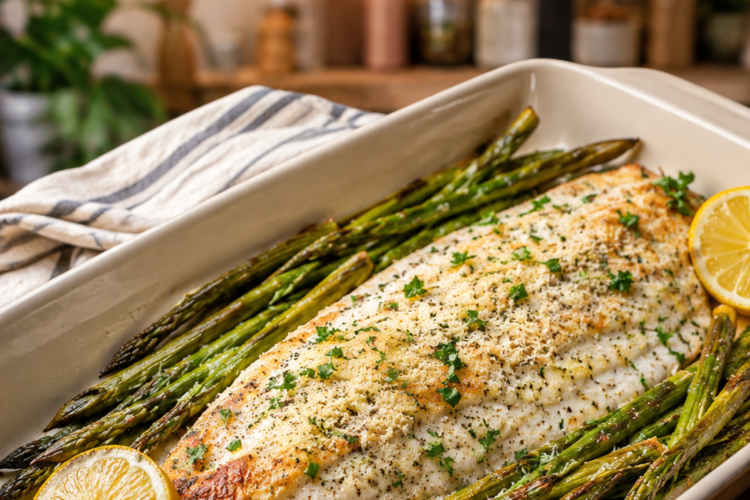
Keto Sheet Pan Salmon & Asparagus is a simple, flavorful, and satisfying meal that brings together tender baked salmon and fresh asparagus in one easy-to-manage dish. Finished with a creamy Dijon topping, grated Parmesan cheese, roasted lemon, and fresh parsley, this recipe is ideal for anyone looking for a low carb dinner, easy keto meal, or healthy salmon recipe that does not require complicated preparation. Everything is cooked on a single sheet pan, which means less time spent washing dishes and more time enjoying a delicious homemade meal.
This low carb salmon recipe works especially well when you want something that feels special without spending hours in the kitchen. Salmon has a naturally rich flavor and pairs beautifully with fresh asparagus, while the lemon adds brightness to the finished dish. The mayonnaise and Dijon mustard coating creates a smooth, flavorful layer over the fish, and the Parmesan adds a savory finish. These ingredients work together without overpowering the natural taste of the salmon, resulting in a balanced meal that is suitable for both everyday dinners and more elegant occasions.
One of the reasons sheet pan recipes are so popular is their convenience. Instead of preparing the protein in one pan and the vegetables in another, everything can be arranged and cooked together. This makes the process easier, reduces cleanup, and helps create a complete meal with very little effort. For people following a ketogenic or low-carb lifestyle, easy sheet pan dinners can be particularly useful because they make it simple to combine a quality protein with a low-carb vegetable in one straightforward recipe.
The combination of salmon and asparagus is also a great choice when you want a meal that is filling without relying on heavy carbohydrate-rich sides. The salmon provides protein and healthy fats, while the asparagus adds freshness, texture, and fiber. The Parmesan, olive oil, and mayonnaise contribute additional richness, creating a meal that feels satisfying and complete. With only 3 grams of net carbohydrates per serving according to the provided nutritional information, this recipe can easily fit into a keto meal plan.
Why This Keto Salmon Recipe Is So Easy
A good weeknight dinner should not require a long list of complicated steps, and this Keto Sheet Pan Salmon & Asparagus recipe keeps the preparation process simple. The salmon is coated with a mixture of sugar-free mayonnaise and Dijon mustard, topped with grated Parmesan cheese, and placed on the sheet pan. The asparagus is tossed with olive oil and arranged around the fish. The lemons are added to the pan, everything is seasoned with salt and pepper, and the meal is ready for the oven.
Because the salmon and vegetables cook together, there is no need to prepare an additional complicated sauce or side dish. The creamy Dijon mixture acts as a flavorful coating, while the roasted lemon can be squeezed over the finished meal for extra freshness. The parsley garnish adds a clean finishing touch and makes the plate look bright and appealing. These simple details help turn an easy baked salmon dinner into a meal that looks attractive enough to serve to guests.
Another advantage is that this recipe can be adapted to the type of salmon you have available. You can use one whole 16-ounce salmon fillet or divide the fish into four individual 4-ounce portions. The ingredients remain exactly the same, but the cooking time changes depending on the size of the salmon. A whole fillet takes longer to cook, while smaller portions require less time in the oven.
This flexibility makes the recipe useful for different occasions. A whole salmon fillet can create an impressive centerpiece for a dinner table, while individual portions make serving easy and convenient. No matter which option you choose, the important thing is to watch the cooking time and check the internal temperature so the salmon remains moist, tender, and flaky.
The Secret to Tender and Flaky Baked Salmon
Salmon can become dry when it is exposed to too much heat or left in the oven for too long. Properly cooked salmon should have a tender texture and separate into flakes easily when gently pressed with a fork. It should not feel tough or dry. For this reason, using a moderate oven temperature and monitoring the fish carefully can make a noticeable difference in the final result.
This recipe uses an oven temperature of 325°F, which allows the salmon to cook more gently. The lower temperature helps reduce the risk of drying out the fish while giving it enough time to cook through. The creamy mayonnaise and Dijon coating also adds moisture and flavor to the surface of the salmon, while the Parmesan provides a savory finish.
You may sometimes notice a white substance appearing on the surface of salmon while it cooks. This is called albumin, which is a naturally occurring protein found in the fish. A small amount can appear during normal cooking, but a large amount may indicate that the salmon has been cooked too aggressively or for too long. Cooking the salmon at a moderate temperature and avoiding unnecessary extra cooking time can help maintain a better texture.
A food thermometer is one of the easiest ways to avoid guessing. The thickest part of the salmon should reach 145°F. Once the fish reaches this temperature, it is ready to be removed from the oven. Since the exact cooking time can vary based on the thickness of the fillet, checking the internal temperature is more reliable than depending only on the clock.
A Flavorful Dijon and Parmesan Salmon Topping
The topping is one of the features that makes this keto baked salmon recipe especially appealing. Sugar-free mayonnaise and Dijon mustard are mixed together to create a creamy coating. This mixture is brushed over the top of the salmon before the grated Parmesan cheese is added. The Parmesan is pressed lightly into the coating so it stays in place while the fish bakes.
The mayonnaise adds richness and helps create a smooth layer over the salmon, while Dijon mustard contributes a mild tangy flavor. Parmesan cheese adds a savory taste that complements both the fish and the asparagus. The ingredients are simple, but together they create more depth than plain baked salmon without requiring a complicated marinade or sauce.
This type of topping can also make salmon more appealing for people who prefer their fish with additional flavor. The salmon remains the focus of the meal, but the creamy and cheesy coating gives every bite more texture and richness. The lemon added after baking helps balance these richer ingredients with a fresh and bright finish.
The result is a flavorful salmon dinner that feels satisfying while still using a short and manageable ingredient list. This is especially helpful when you want to prepare a low-carb meal without purchasing a large number of specialty ingredients. Everything in this recipe has a specific purpose, from the creamy coating to the fresh parsley garnish.
Fresh Asparagus for a Complete Low Carb Meal
Asparagus is a natural match for salmon and works perfectly in this easy sheet pan dinner. Its fresh flavor and slightly crisp texture provide a contrast to the tender fish. In this recipe, the asparagus is trimmed, placed on the sheet pan, and coated with olive oil before baking alongside the salmon.
The olive oil helps the asparagus cook evenly and adds richness to the vegetable. Salt and black pepper season both the salmon and asparagus, keeping the preparation simple. As the ingredients cook together, the finished meal develops a combination of savory, fresh, and slightly tangy flavors from the Parmesan, lemon, and vegetables.
Asparagus can be cooked to different levels of tenderness depending on your preference. Some people enjoy it with a firmer texture, while others prefer softer asparagus. If the salmon reaches the proper temperature before the asparagus is tender enough, the salmon can be removed from the sheet pan while the asparagus continues cooking.
When using smaller salmon portions, the asparagus may need a little extra preparation because the fish cooks more quickly. Microwaving the asparagus for approximately three minutes before adding it to the sheet pan can give it a head start. This helps the vegetable become tender during the shorter baking time required for the individual salmon portions.
Whole Fillet or Individual Salmon Portions
This Keto Sheet Pan Salmon & Asparagus recipe can be prepared with a whole 16-ounce salmon fillet or four 4-ounce portions. Both options use the same ingredients and preparation method, but the cooking time must be adjusted to avoid overcooking the fish.
A whole salmon fillet generally takes around 18 minutes to cook at 325°F. Four individual 4-ounce portions cook more quickly and usually require approximately 12 to 15 minutes. Since salmon thickness can vary, checking the internal temperature remains the best way to determine when it is ready.
A whole fillet can be a good choice when preparing the recipe for guests or serving the meal family-style. It can be placed in the center of a platter with the roasted asparagus around it. Individual portions are convenient when you want to divide the meal into four servings before cooking.
Regardless of the format you choose, place the salmon on the sheet pan with the Parmesan-coated side facing upward. This keeps the flavorful topping visible and allows it to remain on the surface of the fish while baking. Arrange the asparagus around the salmon so the ingredients have enough space to cook properly.
The Fresh Flavor of Roasted Lemon
Lemon is an important ingredient in this low-carb salmon and asparagus recipe because it adds freshness to the rich flavors of the fish, mayonnaise, Parmesan, and olive oil. Two lemons are cut in half and placed directly on the sheet pan with their cut sides facing upward.
As the lemons bake alongside the salmon and asparagus, they warm and soften. After cooking, you can squeeze the desired amount of lemon juice over the finished dish. Always remove any seeds before serving. The amount of lemon can be adjusted according to personal preference.
The acidity of the lemon helps create balance in the recipe. Salmon is naturally rich, while the mayonnaise and Parmesan add additional savory flavor. Fresh lemon juice cuts through that richness and gives the entire meal a lighter finish. It also works beautifully with the asparagus and fresh parsley.
Since the lemons cook directly on the sheet pan, there is no need to prepare a separate dressing or sauce. This supports the easy nature of the recipe and keeps the preparation process simple. The roasted lemon provides plenty of flavor with almost no extra work.
A Quick Keto Dinner with Minimal Cleanup
One of the biggest benefits of this recipe is that it provides a complete meal with minimal cleanup. The salmon and asparagus are prepared and cooked on one sheet pan, reducing the number of dishes needed. For busy weeknights, this can make a big difference.
The preparation process is straightforward. Mix the mayonnaise and Dijon mustard, coat the salmon, add the Parmesan, prepare the asparagus with olive oil, place the lemons on the pan, season everything, and bake. Once the meal is finished, add lemon juice and parsley before serving.
The total recipe time is approximately 23 minutes, making it a useful option when you need a fast homemade dinner. Even though the preparation is quick, the finished dish has an attractive presentation. The golden Parmesan topping, green asparagus, roasted lemons, and parsley create a colorful plate that feels more special than the amount of effort required.
This recipe can also be served warm or chilled. That makes it useful when preparing food ahead of time for lunches, gatherings, or occasions where you want to reduce the amount of last-minute cooking. Properly prepared and stored, the flavors remain enjoyable whether the meal is served immediately or later.
Notes for the Best Results
To keep the salmon tender, avoid cooking it longer than necessary. A whole 16-ounce fillet generally requires around 18 minutes, while four 4-ounce portions need approximately 12 to 15 minutes. These times are useful guidelines, but thickness can affect the exact cooking time.
The best way to know when the salmon is ready is to check the thickest part with a thermometer. The internal temperature should reach 145°F. Once it reaches the proper temperature, remove it from the oven to help prevent the fish from becoming dry.
If you prefer softer asparagus and the salmon finishes first, remove the salmon from the sheet pan and continue cooking the asparagus. This prevents the fish from being overcooked while allowing the vegetable to reach your preferred texture.
For smaller individual salmon portions, microwaving the asparagus for about three minutes before baking can help everything finish closer to the same time. This is a useful option when you want tender asparagus without extending the cooking time of the salmon.
A Healthy and Satisfying Low Carb Salmon Dinner
According to the provided nutritional information, each serving of this Keto Sheet Pan Salmon & Asparagus contains 258 calories, 16 grams of fat, 5 grams of carbohydrates, 2 grams of fiber, and 27 grams of protein. This results in approximately 3 grams of net carbohydrates per serving.
The combination of protein, fat, and low-carb vegetables makes this recipe a practical option for people following keto, low-carb, gluten-free, grain-free, nut-free, or Atkins-style eating plans. It provides a complete meal without depending on bread, pasta, rice, or other high-carbohydrate side dishes.
This recipe also demonstrates how easy healthy cooking can be. You do not need complicated techniques or an extremely long ingredient list to prepare a flavorful meal. The combination of salmon, asparagus, Dijon, Parmesan, lemon, olive oil, and parsley provides plenty of flavor while keeping the cooking process manageable.
Whether you are searching for an easy keto salmon recipe, a low carb sheet pan dinner, or a quick and elegant seafood meal, Keto Sheet Pan Salmon & Asparagus is a reliable choice. The gently baked salmon remains tender, the asparagus adds freshness, and the creamy Dijon and Parmesan topping creates a savory finish. With simple preparation, minimal cleanup, and only one pan required, this recipe is an excellent addition to any collection of easy low-carb dinner ideas.
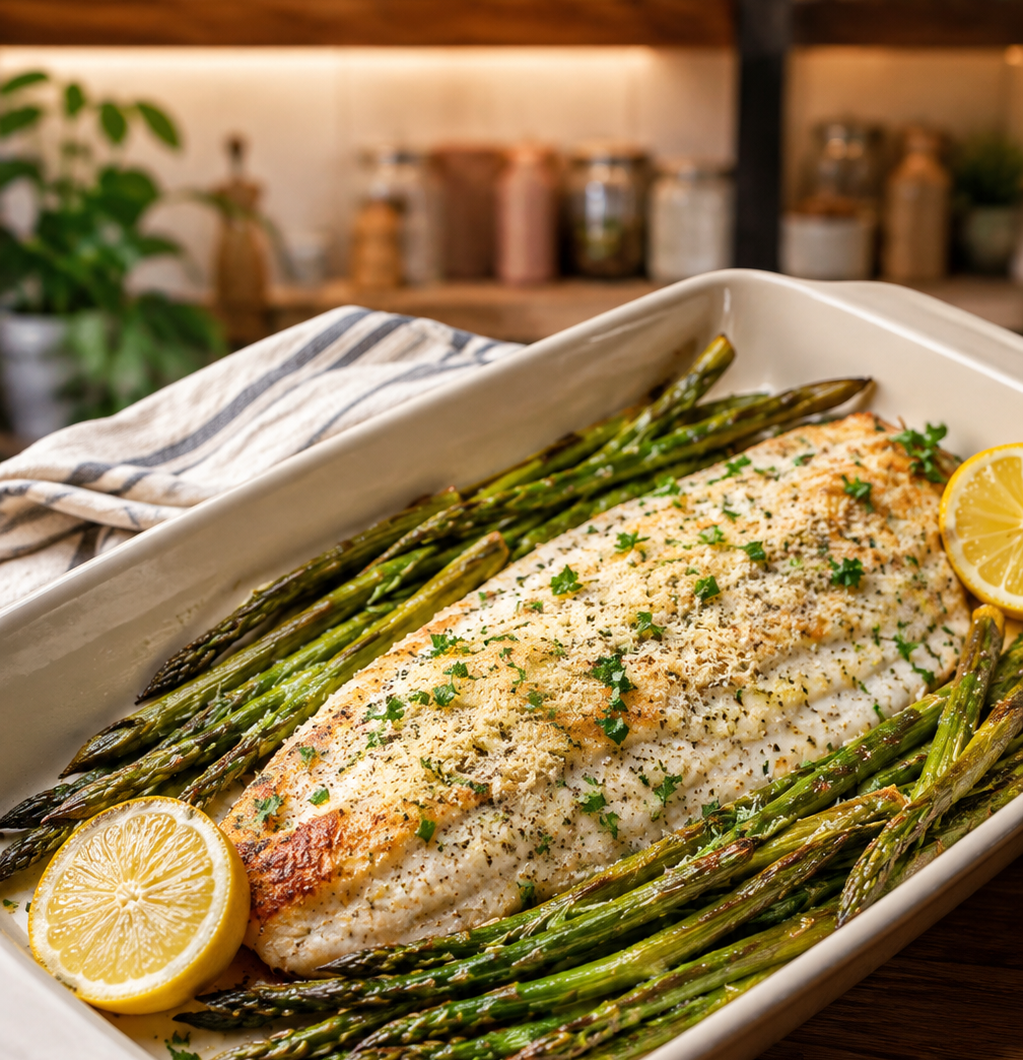
Keto Sheet Pan Salmon & Asparagus – Low Carb
A simple and elegant keto sheet pan meal featuring tender salmon with a creamy Dijon and Parmesan topping, roasted asparagus, fresh lemon, and parsley.
4
servings5
minutes18
minutes258
kcal23
minutesIngredients
16 ounces wild caught salmon, whole fillet or divided into four 4-ounce portions
2 tablespoons sugar free mayonnaise
1 teaspoon dijon mustard
1/4 cup grated parmesan cheese
1 tablespoon olive oil
1 pound fresh asparagus, with the ends trimmed
1/2 teaspoon kosher salt
1/4 teaspoon ground black pepper
2 lemons
2 tablespoons chopped parsley, for garnish
Directions
- Preheat the oven to 325°F and have a large sheet pan ready for the salmon and asparagus.
- Rinse the salmon and pat it dry. Gently run your fingers over the fish and remove any bones that may remain.
- In a small bowl, combine the sugar-free mayonnaise and Dijon mustard. Mix until the ingredients are fully blended.
- Brush the mayonnaise and Dijon mixture evenly over the top of the salmon.
- Sprinkle the grated Parmesan cheese over the coated surface of the salmon. Press it lightly so the cheese remains in place.
- Place the trimmed asparagus on the sheet pan and drizzle it with the olive oil. Toss gently until the spears are evenly coated.
- Spread the asparagus across the sheet pan, leaving enough space in the center for the salmon. Place the salmon on the pan with the Parmesan-coated side facing upward.
- Cut the lemons in half and arrange them on the sheet pan with the cut sides facing upward. Sprinkle the salmon and asparagus with the kosher salt and ground black pepper.
- Bake for approximately 18 minutes when using a whole salmon fillet. If using four 4-ounce portions, bake for approximately 12 to 15 minutes. Cook until the thickest part of the salmon reaches an internal temperature of 145°F.
- If the salmon is cooked but the asparagus has not reached your preferred tenderness, remove the salmon from the sheet pan and return the asparagus to the oven until it is done to your liking. When using smaller salmon portions, the asparagus can also be microwaved for 3 minutes before baking to give it a head start.
- Remove the sheet pan from the oven. Squeeze the desired amount of juice from the roasted lemons over the salmon and asparagus, removing any seeds. Garnish with the chopped parsley.
Notes
- Cooking Whole vs. Individual Salmon Portions
A whole 16-ounce salmon fillet generally takes around 18 minutes to cook, while four individual 4-ounce portions cook more quickly and usually need 12 to 15 minutes. Monitor the internal temperature to prevent overcooking. - Preventing Dry Salmon
The moderate oven temperature of 325°F helps the salmon cook more gently. Avoid leaving the fish in the oven longer than necessary, as overcooking can cause it to become dry and may produce more visible white albumin on the surface. - Asparagus Texture
For softer asparagus, either microwave it for approximately 3 minutes before placing it on the sheet pan when using smaller salmon portions, or continue baking the asparagus after removing the cooked salmon.
Nutrition Facts
- Calories: 258kcal
- Fat: 16g
- Carbohydrates: 5g
- Fiber: 2g
- Protein: 27g
