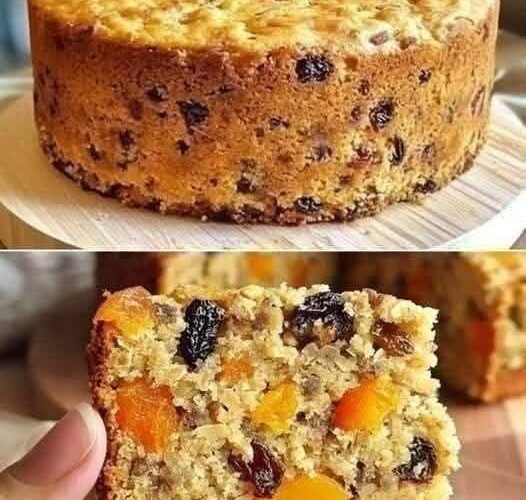
There is something especially comforting about a homemade cake that can be enjoyed for breakfast just as easily as it can be served as an afternoon snack. This Rustic Apple Carrot Oatmeal Breakfast Cake brings together soft oats, juicy apples, fresh carrots, creamy kefir, eggs, honey, and crunchy walnuts in one simple bake.
Rather than using refined flour as the foundation, this recipe relies on oatmeal for its hearty character and satisfying texture. Grated apples and carrots add moisture and natural sweetness, while honey gives the cake a warm, mellow sweetness. Kefir helps soften the oats and contributes a pleasant tang that balances the sweeter ingredients.
The finished cake is not quite like a traditional fluffy sponge cake, and that is part of its appeal. Its texture is wonderfully rustic: moist and tender in the center, lightly golden on top, and pleasantly hearty from the oats. The soft fruit and vegetable pieces are balanced by the occasional crunch of walnuts.
It is an easy recipe to keep on hand when you want a homemade bake without complicated preparation.
Why This Apple and Carrot Oat Cake Is Special
This cake gets much of its character from the way a few everyday ingredients work together.
The oatmeal provides the main body of the bake. Soaking it in kefir before combining it with the other ingredients gives the oats an opportunity to absorb some of the liquid. This helps them become softer and more tender during baking.
The kefir adds moisture and a gentle tang. It works particularly well with honey, apples, and oats, creating a balanced flavor rather than an overwhelmingly sweet one.
The apples contribute juicy texture and natural sweetness. As they cook, they soften and become integrated into the cake, helping create a moist interior and a lovely apple aroma.
The carrots add another layer of natural sweetness and moisture. Finely grating them makes it easier for them to blend into the batter instead of creating large pieces.
The honey acts as the recipe’s main sweetener. Its distinctive flavor pairs naturally with apples, carrots, oats, and walnuts, giving the cake a warm homemade character.
The eggs help bring the mixture together and provide structure as the cake bakes. They also help the finished cake hold together well enough to slice after cooling.
Finally, walnuts add contrast. Their crunchy texture works particularly well against the soft oats, apples, and carrots.
The Importance of Soaking the Oats
The first step may seem small, but allowing the oatmeal to sit with kefir is useful for the final texture.
When the oats are mixed with kefir and left for several minutes, they begin absorbing moisture. Instead of adding completely dry oats directly to the batter, this short resting period gives them a head start.
The result is a mixture that incorporates more naturally with the grated apples and carrots. It also helps prevent the finished cake from having an overly dry or coarse texture.
Five minutes is enough for this recipe. There is no need to prepare the oat mixture hours in advance.
Preparing the Apples and Carrots
Freshly grated apples and carrots are ideal for this cake because they distribute their moisture throughout the batter.
For the carrots, grate them finely so they become easy to incorporate. Large, thick shreds can remain more noticeable in the finished cake, while finer pieces blend more evenly.
The apples can also be grated directly before mixing. Their juice is useful because it contributes moisture to the batter. Rather than trying to make the mixture completely dry, allow the grated apples to contribute their natural moisture.
Using sweet apples will give the finished cake a naturally sweeter flavor.
Building the Batter
Once the oats have softened in the kefir, prepare the egg mixture separately.
Whisking the eggs until smooth and slightly frothy helps create an evenly mixed base. Honey is then incorporated into the eggs so its sweetness is distributed throughout the mixture.
The grated carrots and apples are folded in next. At this stage, the mixture should look colorful and moist, with the grated produce distributed throughout.
The softened oatmeal mixture is then added. Stir everything together carefully until the ingredients are evenly combined.
If you want walnuts throughout the cake, some chopped walnuts can be mixed into the batter. They can also be reserved for the top if you prefer a more pronounced crunchy finish.
Avoid excessive mixing once everything is combined. The goal is simply to distribute the ingredients evenly.
Preparing the Baking Dish
Before baking, preheat the oven to 180°C (356°F).
Prepare your baking dish by lightly greasing it or lining it with parchment paper. This makes removing the finished cake easier and helps prevent the edges from sticking.
Transfer the batter into the prepared dish and spread it into an even layer.
Because the batter contains grated fruit and vegetables as well as softened oats, it may look more substantial than a conventional cake batter. This is completely normal.
Baking the Cake
Place the baking dish in the preheated oven and bake until the cake develops a golden surface and the center is properly set.
The recipe’s baking range is approximately 40–50 minutes, depending on the baking dish and your oven. Begin checking toward the earlier end of the range rather than relying only on the clock.
A toothpick inserted into the center should come out clean when the cake is ready.
The surface should look lightly golden, while the center should no longer appear wet or loose.
Because ovens and baking dishes can vary, the appearance and toothpick test are useful indicators alongside the stated baking time.
Allowing the Cake to Cool
Once baked, remove the cake from the oven and allow it to cool slightly before cutting.
This step is worth the wait. The interior continues to settle as it cools, making the slices easier to handle and helping the cake develop a more cohesive texture.
If you cut into it immediately while it is extremely hot, the moist oat-based center may be softer and more difficult to slice neatly.
For attractive portions, allow the cake to cool sufficiently before serving.
Decorating the Finished Cake
This rustic cake does not require an elaborate decoration, but there are several finishing options already included in the recipe.
Additional chopped walnuts can be scattered over the top for extra texture.
Dried fruits can provide a decorative finish and another chewy element.
For a sweeter presentation, you can add a light glaze or drizzle it with condensed milk.
If you are serving the cake as a dessert, whipped cream can create a softer and more indulgent presentation.
These finishing options allow the same basic cake to suit different occasions without changing the core recipe.
How to Serve Apple Carrot Oatmeal Cake
This cake is versatile enough to serve in several ways.
For breakfast, serve a slice with tea, coffee, or milk. The hearty oats and fruit-and-vegetable combination make it a satisfying morning bake.
For an afternoon snack, serve it at room temperature with your favorite hot drink.
For dessert, a decorative topping such as whipped cream, glaze, condensed milk, or additional walnuts can make the presentation more special.
It can also be enjoyed warm after a short cooling period. Alternatively, refrigerating it and serving it later gives the flavors time to settle.
What the Texture Should Be Like
The ideal finished cake should be moist and tender rather than dry.
The oatmeal gives it a hearty structure, while the grated apples and carrots contribute softness. Kefir adds further moisture, and the eggs help hold everything together.
The cake should slice without falling apart, but it will naturally have a denser and more rustic texture than a conventional flour-based sponge.
Small pieces of apple and carrot should be visible throughout, and walnuts provide occasional crunchy bites if they are incorporated into the batter.
Tips for the Best Results
Choose Sweet Apples
Sweet apples work especially well here because they complement the honey and carrots. They can help create a naturally sweeter overall flavor.
Grate the Carrots Finely
Finely grated carrots distribute more evenly through the batter and contribute moisture without creating overly large pieces.
Do Not Skip the Oat Resting Period
Allowing the oatmeal to sit in kefir for about five minutes gives the oats time to soften before baking.
Mix Until Combined
Once all the ingredients are together, stir just enough to create an evenly distributed batter. There is no benefit to prolonged mixing.
Check the Center
The surface can become golden before the center is completely baked. Use a toothpick in the middle to check whether the cake is ready.
Cool Before Slicing
A short cooling period helps the cake firm up and makes it easier to cut into clean portions.
Adjust the Finish to the Occasion
For a simple breakfast, walnuts alone can be enough. For a more dessert-like presentation, dried fruits, glaze, condensed milk, or whipped cream can be used.
Making It for a Family Breakfast
This recipe is particularly convenient when several people need a simple homemade breakfast.
The preparation requires only a few basic steps: soften the oats, prepare the egg mixture, add the grated apples and carrots, combine everything, and bake.
Because the cake can be served warm or at room temperature, it does not need to be served immediately after coming out of the oven.
It also works well as a make-ahead bake. Preparing it in advance means breakfast can be as simple as slicing and serving.
A Simple Bake for Beginner Bakers
You do not need advanced baking techniques to make this cake.
There is no complicated dough to knead and no elaborate layering process. The recipe mainly involves mixing, soaking, grating, and baking.
The most important details are using finely grated carrots, allowing the oats to soften in kefir, distributing the ingredients evenly, and checking the center before removing the cake from the oven.
These straightforward steps make the recipe approachable for anyone who enjoys homemade baking.
Storage
Allow leftover cake to cool before placing it in an airtight container.
The recipe recommends storing leftovers for up to 3 days.
Keeping the cake properly covered helps maintain its moisture and prevents it from absorbing unwanted odors from the surrounding environment.
If serving it later, you can enjoy it at room temperature or warm it according to your preference.
Recipe Overview
Prep Time: 10–15 minutes
Bake Time: Approximately 40–50 minutes
Total Time: Approximately 1 hour
Servings: 4
Oven Temperature: 180°C (356°F)
Ingredients
- 130 g oatmeal
- 2 eggs
- 250 ml kefir
- 50 g honey
- 2 medium carrots, finely grated
- 2 medium apples, finely grated
- Walnuts, chopped
- Optional garnish: dried fruits, glaze, condensed milk, whipped cream
Instructions
1. Soak the oatmeal.
Place the oatmeal in a large mixing bowl. Pour in the kefir and stir well. Let the mixture stand for approximately 5 minutes so the oats can absorb some of the kefir and soften.
2. Prepare the egg mixture.
In a separate bowl, whisk the eggs until smooth and slightly frothy. Add the honey and continue mixing until the two ingredients are well combined.
3. Add the grated produce.
Add the finely grated carrots and apples to the egg-and-honey mixture. Fold them through until they are evenly distributed.
4. Combine the mixtures.
Add the softened oatmeal and kefir mixture to the apple and carrot mixture. Stir gently until everything is evenly incorporated. Add some chopped walnuts to the batter if desired.
5. Prepare the oven and baking dish.
Preheat the oven to 180°C (356°F). Lightly grease a baking dish or line it with parchment paper.
6. Fill the baking dish.
Transfer the prepared batter into the baking dish. Spread it evenly so the cake can bake consistently.
7. Bake.
Place the dish in the preheated oven and bake for approximately 40–50 minutes. The top should become golden, and a toothpick inserted into the center should come out clean.
8. Cool.
Remove the cake from the oven and allow it to cool slightly before slicing. Cooling helps the cake become easier to cut and serve.
9. Garnish.
Finish with chopped walnuts, dried fruits, a light glaze, condensed milk, or whipped cream, depending on your preference.
10. Serve.
Cut into portions and serve warm or at room temperature with tea, coffee, or milk.
Helpful Tips
- Choose sweet apples when you want a naturally sweeter flavor.
- Finely grate the carrots so they blend smoothly into the batter.
- Give the oats the full 5-minute resting period in the kefir.
- Avoid excessive mixing after combining the ingredients.
- Check the center of the cake with a toothpick before removing it from the oven.
- Let the cake cool before slicing for cleaner portions.
- Add walnuts to the batter, use them as a topping, or do both according to your preference.
- Use the optional garnish to give the cake a simple breakfast appearance or a more decorative dessert presentation.
Storage
Store leftover cake in an airtight container for up to 3 days.
Serving Ideas
Enjoy a slice:
- For breakfast with coffee, tea, or milk
- As a simple afternoon snack
- At room temperature
- Slightly warm
- As a light dessert with an optional topping
Recipe Notes
The finished cake has a naturally rustic, moist, and hearty texture from the combination of oatmeal, kefir, apples, and carrots. The honey complements the fruit and vegetables, while walnuts provide a pleasant crunchy contrast.
