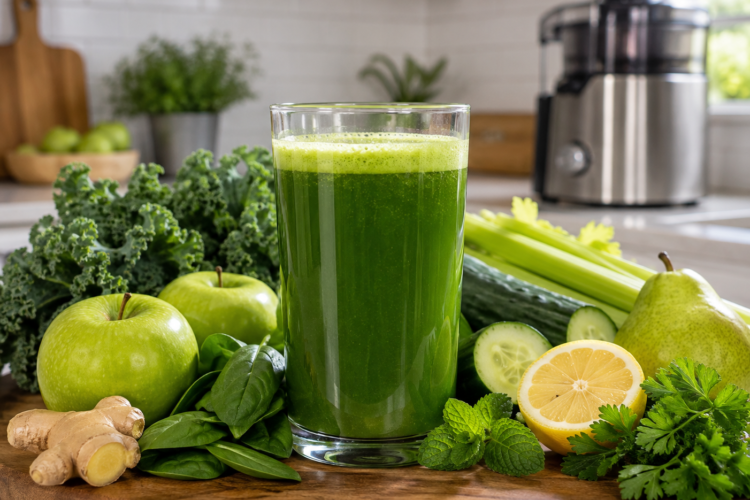
Homemade Fresh Green Juice is a crisp and refreshing drink made with green apples, cucumbers, celery, spinach, kale, lemon, ginger, parsley, mint, and pear. The combination creates a naturally vibrant green juice with layers of sweet, tart, earthy, citrus, and herbal flavor. Prepared entirely from fresh produce, this easy green juice recipe is a practical choice when you want a homemade beverage that brings several fruits, vegetables, leafy greens, and fresh herbs together in one glass.
Making fresh green juice at home also gives you complete control over the ingredients and final flavor. You can prepare it immediately before serving, decide whether you prefer a little natural pulp or a smoother strained consistency, and use optional cold water when you want a lighter drink. The complete recipe takes approximately 30 minutes and makes four servings, making it convenient for breakfast, brunch, or a refreshing drink later in the day.
Why Make Fresh Green Juice at Home?
Preparing green juice at home is surprisingly straightforward when you have a juicer and fresh produce ready. Instead of relying on a bottled drink that may have been prepared well before you consume it, you can juice the ingredients and serve them immediately. Fresh preparation also lets you experience the individual flavors of crisp apples, cooling cucumber, leafy greens, bright lemon, spicy ginger, and aromatic herbs at their freshest.
Another advantage is control over consistency. Some people enjoy freshly extracted juice exactly as it comes from the juicer, including a small amount of fine pulp. Others prefer a very smooth beverage and can pass the finished juice through a fine-mesh strainer. The recipe also includes one cup of cold water as an optional ingredient, so the intensity can be adjusted without changing the core combination of produce.
Understanding the Flavor of Green Juice
A good homemade green juice should not taste overwhelmingly grassy or bitter. This recipe balances stronger leafy vegetables with naturally sweet and tart fruits. Green apples and pear provide fruity sweetness, while cucumber contributes a clean and refreshing character. Lemon brings acidity that brightens the mixture and prevents the flavors of spinach and kale from becoming too dominant.
Ginger adds gentle warmth, while mint and parsley create a fresh herbal finish. Celery contributes a slightly savory note that sits between the sweeter fruits and earthier greens. When all the extracted juices are thoroughly stirred together, these contrasting ingredients create a balanced beverage rather than tasting like a collection of separate vegetables and fruits.
Choosing Green Apples
Four large green apples provide much of the fruit base for this fresh green juice. Their crisp texture produces plenty of liquid, while their combination of tartness and natural sweetness helps soften the stronger flavors of kale, celery, parsley, and other green ingredients.
Choose apples that feel firm and heavy rather than soft or wrinkled. Wash them carefully and remove the cores before juicing. There is no need to peel them for the original recipe. Preparing the apples shortly before juicing also helps preserve their fresh flavor and prevents the cut surfaces from sitting exposed unnecessarily.
Why Cucumber Is Important
Two large cucumbers contribute considerable freshness to this juice. Because cucumbers naturally contain plenty of water, they help create a lighter consistency while balancing the more concentrated flavors of leafy greens and herbs.
Choose firm cucumbers with fresh-looking skin and no large soft areas. Wash them thoroughly before preparation and cut them into pieces that fit comfortably through your juicer’s feeding chute. Cucumber is also useful when processing leafy greens because alternating greens with firmer, moisture-rich ingredients can help move everything through the machine more efficiently.
Using Fresh Celery
Six celery stalks add a clean, slightly savory character to the recipe. Celery has a very different flavor from apples and pear, which helps keep the finished drink from becoming overly fruity.
Clean the celery thoroughly because dirt can sometimes collect around the stalks. Depending on the size of your juicer, whole stalks may need to be cut into smaller pieces before processing. Alternating celery with softer ingredients can also help maintain a steady flow through the juicer and improve the overall preparation process.
Adding Fresh Spinach
Three cups of fresh spinach leaves provide a mild leafy-green flavor and contribute to the deep green appearance of the finished juice. Compared with some stronger greens, spinach has a relatively gentle taste, which allows it to blend naturally with cucumber, apples, lemon, and herbs.
Inspect the leaves before juicing and remove any that are yellow, wilted, or damaged. Rinse the spinach carefully under cool running water and drain it well. When juicing, feed the leaves through the machine alongside pieces of apple or cucumber rather than trying to process all the spinach by itself.
Using Kale Without Overpowering the Juice
Two cups of kale leaves add a stronger green character than spinach. Remove the stems before measuring and juicing because the recipe specifically calls for kale leaves with stems removed. This produces a smoother balance and keeps the preparation consistent with the original formula.
Kale’s more pronounced flavor is balanced by four green apples, one pear, cucumber, and lemon. Alternating kale leaves with juicy pieces of apple or cucumber can help the juicer process them more efficiently. Use fresh, deep-green leaves and discard any pieces showing significant yellowing or deterioration.
Why Lemon Brightens Green Juice
One large peeled lemon brings fresh citrus acidity to the drink. This acidity is especially useful in a recipe containing several leafy and herbal ingredients because it brightens the overall flavor and provides contrast to their earthy notes.
Peel the lemon before juicing and remove most of the thick white pith. Cut it into smaller pieces if necessary for your machine. Since lemon has a strong flavor, the single large fruit specified in the recipe is enough to add noticeable citrus character without turning the finished juice into a lemon-based beverage.
Fresh Ginger Adds Warmth
A one-inch piece of fresh ginger root introduces a warm, lightly spicy flavor. Ginger is potent even in small amounts, so the specified piece is sufficient for this batch.
Wash the ginger before using it and cut it into manageable chunks. It is processed toward the end with the lemon and herbs, allowing its distinctive flavor to become part of the finished blend. The combination of spicy ginger and cooling cucumber and mint gives the juice additional depth without requiring dried spices or flavoring powders.
Fresh Parsley and Mint
One handful each of fresh parsley and mint gives the green juice its aromatic herbal finish. Parsley has a clean green flavor, while mint contributes a cooler and more immediately recognizable freshness.
Choose herbs with vibrant leaves and a fresh aroma. Wash them thoroughly and remove thick stems if desired before processing. Because herbs are relatively soft and lightweight, they can be alternated with firmer produce in the juicer. Their flavor is noticeable, so there is no need to increase the amounts beyond the handful specified in the original recipe.
Pear Adds Mellow Sweetness
One medium green pear provides another layer of natural fruit sweetness. Its flavor is generally softer and more mellow than the sharper character of green apples, helping round out the finished juice.
Select a pear that is ripe enough to have good flavor but still firm enough for easy juicing. Wash it and remove the core during preparation. The pear combines particularly well with apple, cucumber, and lemon and helps create a more balanced transition between the fruit ingredients and stronger leafy greens.
Choosing Fresh Produce
The quality of a fresh juice depends heavily on the ingredients that go into the juicer. Choose firm apples without significant bruising, crisp cucumbers, fresh celery, vibrant spinach and kale, fragrant herbs, and a juicy lemon. Produce that has been sitting too long can affect both the amount of juice extracted and the finished flavor.
Whenever possible, prepare the juice soon after purchasing the produce. Store the ingredients appropriately before use and wash everything thoroughly under cool running water. Since most ingredients are being juiced raw, careful washing and inspection are particularly important before they enter the machine.
Equipment Needed for Green Juice
A juicer is the main piece of equipment required for this recipe. You will also need a sharp knife and cutting board for preparing the fruits and vegetables, bowls for organizing the ingredients, and a pitcher or similar container for collecting and mixing the finished juice.
A fine-mesh strainer is optional. Use it only if you prefer a smoother drink with less natural pulp. Serving glasses are also useful to have ready before you begin, particularly because freshly prepared green juice is best enjoyed soon after it has been made.
Preparing the Produce for Juicing
Begin by washing all fruits, vegetables, leafy greens, and herbs thoroughly under cool running water. Inspect spinach and kale carefully and remove damaged or wilted leaves. Core the apples and pear, peel the lemon, and remove most of its white pith.
Cut cucumbers and celery into smaller pieces when necessary to fit your juicer. Slice the ginger into manageable chunks and remove thick stems from the herbs if desired. Arrange all prepared ingredients near the machine before switching it on. Having everything ready allows the juicing process to continue smoothly without repeated interruptions.
Start with the Leafy Greens
Begin juicing with the spinach and kale. Leafy greens can sometimes be more difficult for a juicer to process efficiently because they are soft and lightweight. Instead of feeding all the greens through consecutively, alternate them with pieces of cucumber or apple.
The firmer produce helps push the leafy material through the machine and can improve extraction. Continue at a steady pace rather than forcing large quantities into the juicer at once. Always follow the operating instructions supplied with your particular machine, since feeding-chute sizes and juicing mechanisms vary between models.
Juice the Fruits and Vegetables
After beginning with the greens, continue processing the celery, cucumbers, apples, and pear. Alternate the ingredients rather than processing an entire quantity of one item before moving to the next.
This approach helps maintain a consistent flow through the machine and naturally begins combining different flavors as the juice is extracted. The water-rich cucumber also helps move remnants of leafy greens through the juicer, while apples and pear contribute their sweeter fruit juices to the mixture.
Add Lemon, Ginger and Fresh Herbs
Process the peeled lemon, fresh ginger, parsley, and mint after the main fruits and vegetables. These ingredients are highly aromatic and provide the final flavor accents.
Lemon introduces bright acidity, ginger contributes gentle spice, and the herbs create a clean finish. Once everything has passed through the juicer, check the pulp container for any unusually large unprocessed pieces before switching off and cleaning the machine.
Mix the Fresh Juice Thoroughly
Even when different ingredients are alternated through the juicer, the collected liquid should be stirred before serving. Pour all the extracted juice into a large pitcher and mix thoroughly.
Stirring distributes the sweeter fruit juices, stronger green components, lemon, ginger, and herbs evenly throughout the batch. Taste the mixture after stirring. If the flavor feels stronger or more concentrated than you prefer, the original recipe allows up to one cup of cold water as an optional ingredient for adjusting the consistency.
Should You Strain Green Juice?
Straining is entirely optional. Some juicers naturally produce a very smooth beverage, while others allow a small amount of fine pulp to remain. Many people enjoy this natural texture and can serve the juice directly from the pitcher.
For a smoother finish, position a fine-mesh strainer over a clean bowl or pitcher and slowly pour the extracted juice through it. The strainer will catch additional pulp while the liquid passes through. The collected pulp can be discarded or reserved for another suitable use.
Serving Fresh Green Juice
Green juice tastes especially refreshing when served cold. Using chilled produce can help keep the beverage cool from the moment it is extracted. Ice cubes can also be added to individual glasses immediately before serving.
For presentation, garnish glasses with a cucumber slice, lemon wheel, mint sprig, or thin apple slice. Keep garnishes simple so they complement rather than distract from the vibrant green appearance of the juice. Serve soon after preparation for the freshest flavor and aroma.
Serving Green Juice with Breakfast
Fresh green juice can be served alongside a regular breakfast rather than necessarily being consumed on its own. The source suggests pairing it with oatmeal, yogurt, eggs, or whole-grain toast.
The fresh, cool character of the juice creates a pleasant contrast with warm breakfast foods. Preparing the fruits and vegetables the evening before can also shorten the morning preparation process, although the actual juicing is best completed closer to serving.
Enjoying Green Juice Later in the Day
This homemade juice is not limited to breakfast. A chilled glass can be served as a midday beverage or alongside a light lunch such as a salad or sandwich. Its combination of fruit, vegetables, herbs, ginger, and citrus gives it enough flavor to be enjoyed without additional syrups or flavorings.
Keeping the juice properly chilled is important when it will not be consumed immediately. If preparing a batch for later, transfer it to suitable airtight containers and refrigerate promptly rather than leaving it standing at room temperature for an extended period.
Creative Green Juice Variations
The basic recipe can inspire several variations when you want a different flavor. Fresh pineapple can create a more tropical version, while lime can be added alongside lemon for extra citrus character. Additional spinach, romaine lettuce, or Swiss chard can produce a more intensely green version.
For a lighter summer variation, extra cucumber can emphasize the cooling flavor. Those new to green juice may prefer reducing the kale and increasing the apple, while people who enjoy herbal flavors can experiment with additional parsley or mint. These are optional variations and do not change the original recipe presented below.
How to Store Fresh Green Juice
Freshly extracted juice is best served soon after preparation, but short-term refrigeration is possible. Transfer leftover juice into clean, airtight glass bottles or containers and fill them as close to the top as practical before sealing.
Refrigerate the containers immediately and use the juice within 24 hours for the best flavor and freshness. Natural separation can occur during storage as different components settle. This is normal. Gently shake or stir the refrigerated juice before serving again.
Notes for the Best Results
Use fresh produce and chill it before juicing when you want an especially cold drink. Wash every ingredient carefully, remove damaged leaves, and cut larger produce according to the size of your juicer. Alternating leafy greens with firmer ingredients such as apple or cucumber can make extraction easier and help maintain a steady flow through the machine.
Taste the finished juice only after all the extracted liquids have been thoroughly combined. Use the optional cold water when you prefer a lighter consistency. Serve the juice promptly, refrigerate leftovers immediately, and clean the juicer soon after use because fresh pulp is much easier to remove before it dries onto the machine.
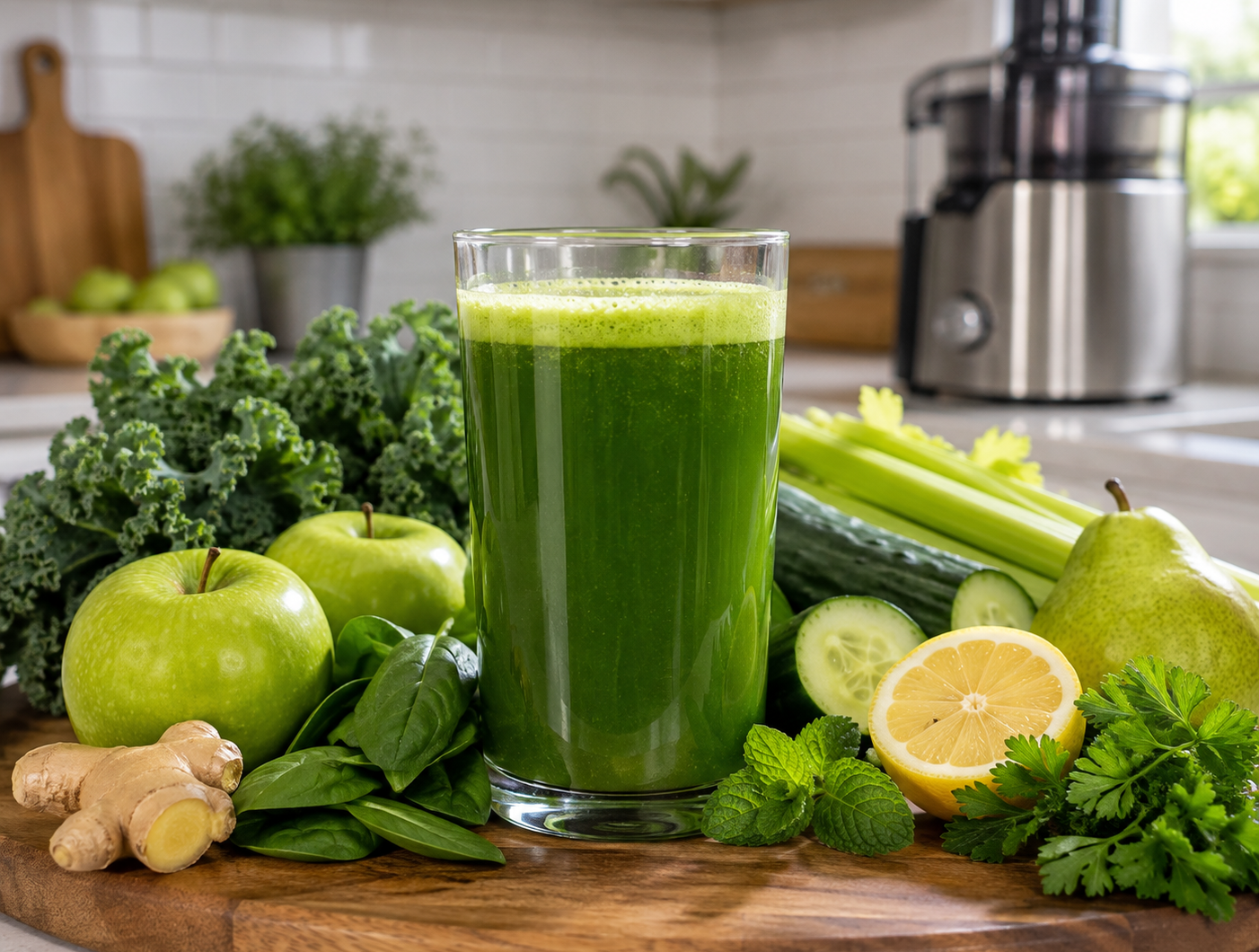
Healthy Homemade Fresh Green Juice
A refreshing homemade green juice made with apples, cucumber, celery, leafy greens, lemon, ginger, pear, and fresh herbs.
4
servings20
minutes10
minutes30
minutesIngredients
4 large green apples, cored
2 large cucumbers
6 celery stalks
3 cups fresh spinach
2 cups kale, stems removed
1 large lemon, peeled
1-inch fresh ginger
1 handful fresh parsley
1 handful fresh mint
1 medium green pear
1 cup cold water, optional
Ice cubes, for serving
Directions
- Wash and prepare all produce.
- Core apples and pear; peel the lemon.
- Juice spinach and kale, alternating with apple or cucumber.
- Juice celery, cucumber, apples, and pear.
- Juice lemon, ginger, parsley, and mint.
- Pour into a pitcher and stir well.
- Add cold water if desired.
- Strain if preferred.
- Serve chilled over ice.
