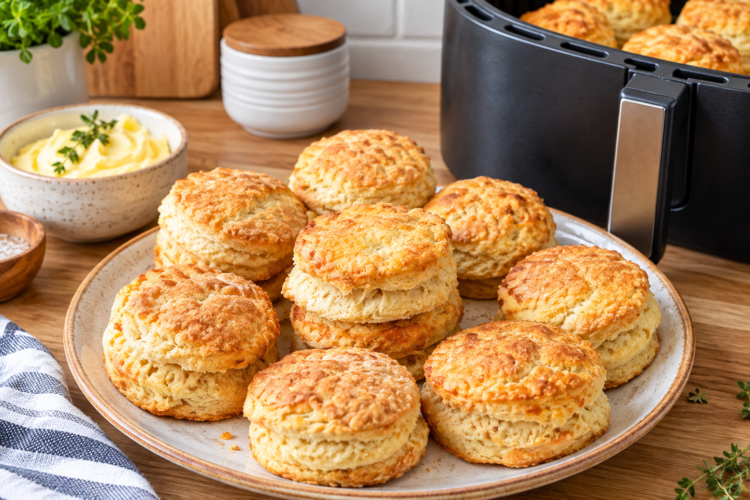
Air Fryer Buttermilk Biscuits are a simple way to make homemade biscuits with crisp golden tops and soft, flaky centers. The dough is made with cold butter, chilled buttermilk, flour, and a few basic baking ingredients. Instead of using a traditional oven, these biscuits cook in the air fryer for a quick and easy breakfast or side dish.
The secret to good air fryer biscuits is keeping the dough cold and handling it gently. Small pieces of cold butter create pockets throughout the dough as the biscuits cook. The result is a tender texture with a lightly crisp outside and a buttery middle that is perfect with honey, jam, or extra butter.
Why Make Biscuits in the Air Fryer?
An air fryer can make homemade buttermilk biscuits without heating the whole kitchen. The smaller cooking space heats quickly, and the circulating air helps the biscuit tops become golden while the centers stay soft.
Air fryer biscuits are also convenient when you only need a small batch. Depending on the size of your basket, you may need to cook the biscuits in batches. Keeping them in a single layer gives the hot air enough room to circulate around each biscuit.
What Makes a Good Buttermilk Biscuit?
A good buttermilk biscuit should be tender, buttery, and slightly flaky rather than dense or hard. The texture comes from the way the cold butter is worked into the flour and how the dough is handled afterward.
Buttermilk also plays an important role. It adds moisture and a mild tang while reacting with the baking soda to help the biscuits rise. Keeping the buttermilk chilled also helps the dough stay cold during preparation.
Keeping the Ingredients Cold
Cold ingredients are particularly important for this recipe. The butter should remain chilled until it is worked into the flour, and the buttermilk should also be cold when it is added.
When small pieces of cold butter are surrounded by flour and then exposed to the heat of the air fryer, the butter melts during cooking. This helps create small layers and pockets in the biscuit rather than producing a flat, heavy texture.
Mixing the Dry Ingredients
Start by whisking the all-purpose flour, baking powder, baking soda, sugar, and kosher salt together in a large bowl. This distributes the leavening ingredients and seasoning throughout the flour.
Even mixing at this stage helps the biscuits rise more evenly. It also prevents pockets of baking powder, baking soda, or salt from ending up in individual biscuits.
Working in the Cold Butter
Add the chilled butter cubes to the flour mixture. Use a pastry cutter or your hands to break the butter into the flour until the mixture contains pea-sized pieces.
Do not try to make the butter disappear completely into the flour. Those small pieces are useful because they help create the flaky texture of the finished biscuits. The mixture should still show small pieces of butter rather than looking completely smooth.
Why Pea-Sized Butter Pieces Matter
The size of the butter pieces affects the texture of the biscuits. Pieces that are around pea size are large enough to create pockets during cooking while still being distributed throughout the dough.
If the butter becomes very soft while you are working with it, place the mixture in the refrigerator briefly before continuing. Keeping the butter cold is more important than rushing through the preparation.
Adding the Buttermilk
Pour the chilled buttermilk over the flour and butter mixture. Stir gently until the dough just comes together. Avoid mixing for longer than necessary because overworking the dough can make the biscuits tougher.
The dough does not need to look perfectly smooth. A slightly rough dough is normal at this stage. Once the flour is mostly incorporated and the mixture can be gathered together, stop mixing.
Adjusting the Dough
Sometimes the dough may look a little dry depending on the flour and how it was measured. If it seems overly dry, a small splash of additional buttermilk can help bring it together.
If the dough is too wet or sticky to handle, add a tablespoon more flour. Make small adjustments rather than adding a large amount at once. The goal is a soft dough that can be gently shaped without becoming difficult to work with.
Shaping the Biscuit Dough
Transfer the dough to a lightly floured surface. Gently pat it into a disc about ¾ inch thick. There is no need to knead it like bread dough.
Handling the dough as little as possible helps maintain the butter pieces and keeps the biscuits tender. Press the dough evenly so the biscuits will have a similar thickness and cook at approximately the same rate.
Cutting the Biscuits Correctly
Use a 2 to 3-inch round cutter to cut the biscuits. Press the cutter straight down into the dough and then lift it straight back up.
Do not twist the biscuit cutter. Twisting can press and seal the edges of the dough, which can interfere with the biscuits rising during cooking. A straight downward cut leaves the edges more open.
Using the Extra Dough
After cutting the first biscuits, you will have some dough scraps. Do not throw them away. Gently bring the scraps together and pat them out again to make additional biscuits.
Try not to repeatedly knead or squeeze the scraps because excessive handling can make the later biscuits less tender. Gather them gently, flatten them, and cut as many additional biscuits as the dough allows.
Arranging Biscuits in the Air Fryer
Place the biscuits in the air fryer basket in a single layer. The biscuits should be close together rather than widely separated. This arrangement helps them rise tall while they cook.
Depending on the size of your air fryer, you may not be able to fit all ten biscuits at once. If necessary, cook them in batches. Avoid overcrowding because the biscuits need enough room for the hot air to circulate.
The Best Air Fryer Temperature
Cook the buttermilk biscuits at 325°F. This temperature gives the biscuits time to cook through while allowing the tops to become golden brown.
The cooking time is about 13 to 15 minutes. Since air fryer models can differ, start checking the biscuits toward the end of the cooking period. They should look golden and feel fluffy when ready.
How to Tell When Biscuits Are Done
The biscuits should have a golden-brown surface and look fully risen. The outside should be lightly crisp, while the inside should remain soft and tender.
If the tops brown quickly but you are unsure whether the centers are cooked, check one biscuit before removing the entire batch. Cooking time can vary based on the air fryer, biscuit size, and how closely the biscuits are arranged.
Why the Biscuits Should Be Close Together
For traditional tall biscuits, the pieces are often arranged close together. The sides support each other as the dough rises, which can help produce thicker biscuits.
In the air fryer, this arrangement also makes better use of the basket. Just make sure the biscuits are not packed so tightly that airflow is completely restricted. A single layer with the biscuits close together is the preferred arrangement for this recipe.
Serving Homemade Air Fryer Biscuits
Freshly cooked biscuits are best served warm. Cut one open and add butter while it is still hot, or serve the biscuits with honey or your favorite jam.
They can be served for breakfast alongside eggs or other breakfast foods. They also work well as a bread side with soups, stews, roasted chicken, or other savory meals.
Butter, Honey, or Jam
There are several easy ways to serve these biscuits. Butter keeps things simple and lets the homemade biscuit flavor stand out. Honey adds sweetness and works especially well with the mild tang of buttermilk.
Jam is another good option for breakfast or an afternoon snack. Choose any favorite flavor that pairs well with buttery biscuits. You can also split a warm biscuit and use it as the base for a simple breakfast sandwich.
Making Homemade Buttermilk
Real buttermilk is the preferred ingredient for this recipe, but you can make a quick substitute if you do not have it available. Combine 1 cup of milk with 1 tablespoon of white vinegar and let the mixture sit for 5 to 10 minutes.
This mixture can provide the acidity needed for the recipe, although it will not have exactly the same flavor or texture as traditional buttermilk. If real buttermilk is available, it remains the better choice for these biscuits.
Notes for Keeping Biscuits Flaky
The most important thing to remember is to keep the dough cold. Warm butter can blend too completely into the flour, reducing the small pockets that help give biscuits their flaky texture.
Work quickly but gently when combining the ingredients. If your kitchen is warm or the dough begins feeling soft, chilling it briefly before cutting can help maintain the cold butter.
Avoid Overmixing the Dough
Once the buttermilk is added, mix only until the ingredients come together. There is no benefit to repeatedly stirring or kneading the biscuit dough.
Overworking can develop the flour and make the finished biscuits tougher. A slightly uneven dough is perfectly fine. The goal is to combine the ingredients without losing the cold butter pieces.
Notes for Cutting Biscuits
Use a sharp round cutter and press straight down. Avoid turning the cutter while it is in the dough.
The straight cut keeps the edges from becoming compressed. This small technique can make a difference in how well the biscuits rise in the air fryer.
Common Questions About Air Fryer Biscuits
Can I Use Warm Butter?
Cold butter is strongly recommended for this recipe. Warm or melted butter changes the texture of the dough and can reduce the flaky layers that come from small pieces of chilled butter.
Keep the butter refrigerated until you are ready to add it to the flour. If it begins softening during preparation, chill the dough before shaping.
Why Did My Biscuits Not Rise?
One possible reason is twisting the biscuit cutter. Twisting can seal the edges of the dough and make it harder for the biscuits to rise.
The dough may also have been overmixed. Handle it gently after adding the buttermilk and cut the biscuits with a straight downward motion.
Can I Make More Than Ten Biscuits?
The recipe is designed to make 10 biscuits, but the exact number can vary slightly depending on the cutter size and thickness of the dough. Using a 2 to 3-inch cutter will give you biscuits close to the intended size.
You can use the dough scraps to make additional biscuits. Gather the scraps gently, pat them out again, and cut more rounds.
Do I Need to Preheat the Air Fryer?
The supplied instructions do not include a separate preheating step. Follow your air fryer’s normal operating instructions, and cook the biscuits at 325°F as directed.
Why Are My Biscuits Dry?
Dry biscuits can result from adding too much flour or overworking the dough. Measure the flour carefully and only add extra flour if the dough is genuinely too wet to handle.
If the mixture looks dry before shaping, a small splash of buttermilk can help. Add it gradually so the dough does not become overly wet.
Can I Brush the Biscuits After Cooking?
Yes. The finished biscuits can be brushed with butter or honey after cooking. This adds extra flavor and gives the warm biscuits an appealing finish.
Storing and Reheating Biscuits
These biscuits are best when served fresh, but any extras can be kept for later. Store them properly and reheat them before serving if you want to bring back some of their warmth and softness.
The air fryer can be useful for reheating because it warms the biscuits quickly. Use a short reheating period and check them often so they do not become dry.
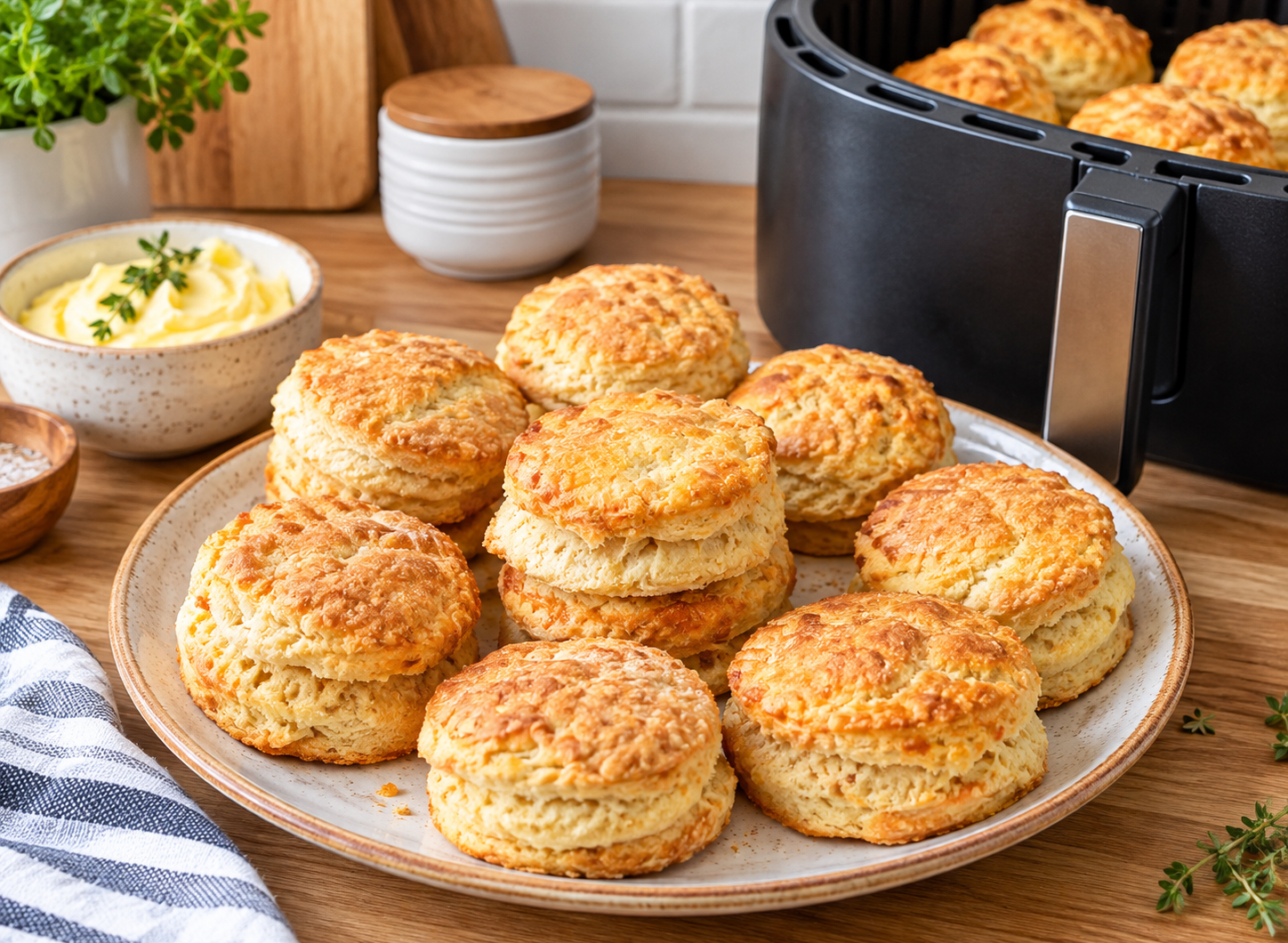
Air Fryer Buttermilk Biscuits
These homemade Air Fryer Buttermilk Biscuits have a golden outside, soft center, and flaky texture from chilled butter and buttermilk. They are easy to make and can be served warm with butter, honey, or your favorite jam.
10
biscuits10
minutes15
minutes213
kcal25
minutesIngredients
2 ½ cups all-purpose flour, plus extra for the work surface
1 ½ tablespoon baking powder
1 teaspoon sugar
½ teaspoon baking soda
1 teaspoon kosher salt
½ cup unsalted butter, chilled and cut into small cubes
1 cup buttermilk, chilled
Directions
- Add the all-purpose flour, baking powder, baking soda, sugar, and kosher salt to a large bowl. Whisk until evenly combined.
- Add the chilled butter cubes. Use a pastry cutter or your hands to work the butter into the flour until pea-sized pieces remain. Keep the butter as cold as possible.
- Pour in the chilled buttermilk and gently mix just until the dough comes together. Do not overmix. If the dough is too dry, add a small splash of buttermilk. If it is too wet, add 1 tablespoon more flour.
- Transfer the dough to a floured surface and gently pat it into a disc about ¾ inch thick. Use a 2–3-inch round cutter to cut the biscuits. Press straight down and lift without twisting. Gently bring the scraps together and cut additional biscuits.
- Arrange the biscuits in a single layer in the air fryer basket, keeping them close together. Cook at 325°F for 13–15 minutes, or until golden brown and fluffy. Cook in batches if necessary.
- Serve the warm biscuits with butter, honey, or your favorite jam.
Nutrition Facts
- Calories: 213kcal
- Fat: 10g
- Sodium: 316mg
- Carbohydrates: 26g
- Fiber: 1g
- Sugar: 2g
- Protein: 4g
