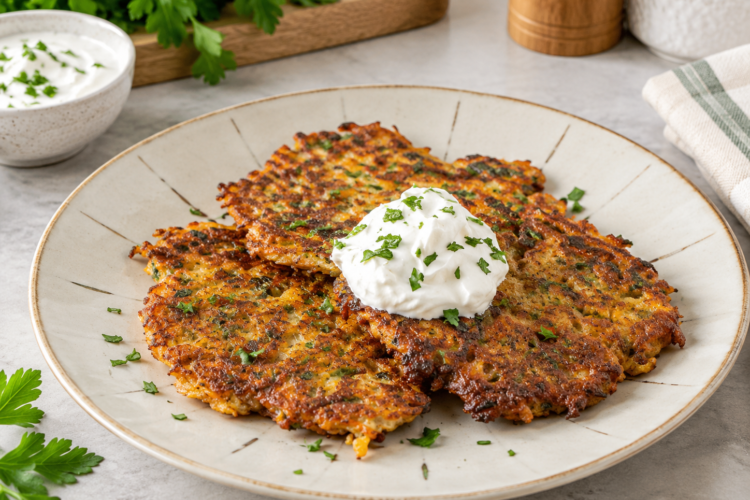
These easy Vegetable Pancakes are a simple way to turn everyday vegetables into a tasty meal. Made with shredded mixed vegetables, eggs, whole-wheat flour, and a little salt, they cook quickly in a skillet until golden on the outside. They are suitable for lunch, dinner, or a simple vegetable side dish and can be served warm with sour cream or applesauce.
A Simple Way to Use Extra Vegetables
One of the best things about this vegetable pancake recipe is that it does not depend on one exact combination of vegetables. You can use a mixture of vegetables you already have in the refrigerator, making this a useful recipe when you need to clear out small amounts of produce. White potatoes, sweet potatoes, zucchini, yellow squash, and carrots all work well.
Why Vegetable Pancakes Are Useful
Vegetable pancakes are an easy choice when you want to add more vegetables to a meal without making a complicated dish. Shredding the vegetables helps them cook quickly and makes them easy to combine with the egg and flour mixture. The finished pancakes have browned edges and a tender center, creating a texture that works well for both children and adults.
A Quick Lunch or Dinner
With only 5 minutes of preparation and 10 minutes of cooking, these pancakes can be ready in about 15 minutes. That makes them useful for busy weekdays when you want something homemade without spending a long time in the kitchen. They can be served on their own for a light meal or alongside another dish as a vegetable side.
Choosing the Vegetables
The original recipe uses 2 cups of mixed shredded vegetables and suggests several options. You can combine white potatoes, sweet potatoes, zucchini, yellow squash, and carrots in different proportions. The important part is to shred the vegetables so they are small enough to cook through while the outside of the pancakes becomes lightly browned.
Using Potatoes in the Mixture
White potatoes and sweet potatoes can give the pancakes a more substantial texture. They also help create a slightly hearty center when combined with the egg and flour. If you include potatoes, shred them finely so they have enough time to soften during the short cooking period. A mixture of potato and other vegetables creates a balanced texture.
Adding Zucchini and Squash
Zucchini and yellow squash bring moisture and a mild vegetable flavor to the pancake mixture. Because these vegetables contain a lot of water, the mixture should be combined thoroughly with the eggs and flour before cooking. They pair particularly well with potatoes and carrots, giving the pancakes a mixture of soft and slightly firm textures.
Carrots Add Color
Shredded carrots give the pancakes a natural orange color and a mild sweetness. They also add a pleasant texture when mixed with softer vegetables such as zucchini or squash. Carrots are especially useful when you want to make a mixed vegetable pancake that looks appealing without adding sauces or extra seasoning.
The Role of Eggs
Eggs help bind the shredded vegetables together so the mixture can be formed into pancake-sized portions. They also contribute protein to the recipe and help the pancakes develop a lightly firm surface as they cook. Make sure the eggs are mixed thoroughly with the vegetables so they are distributed throughout the mixture.
Why Whole-Wheat Flour Is Used
One tablespoon of whole-wheat flour helps absorb some of the moisture and gives the mixture enough structure to hold together in the skillet. Because only a small amount is used, the pancakes still have a strong vegetable component. Mixing the flour evenly through the vegetables helps prevent loose or overly wet areas.
Keeping the Seasoning Simple
The original recipe uses only ¼ teaspoon of salt, allowing the natural flavors of the vegetables to remain noticeable. This simple seasoning also makes the pancakes easy to pair with different garnishes. If you enjoy stronger flavors, you can serve the finished pancakes with a flavorful accompaniment rather than changing the original ingredient list.
Preparing the Vegetable Mixture
Start by placing the 2 cups of shredded mixed vegetables in a bowl. Add the 2 eggs, 1 tablespoon of whole-wheat flour, and ¼ teaspoon of salt. Mix everything thoroughly so the egg and flour coat the shredded vegetables. A well-mixed batter helps the pancakes hold together when they are placed into the hot pan.
Getting the Mixture Ready for Cooking
The vegetable mixture should be moist enough to hold together but not treated like a smooth batter. The shredded vegetables should remain visible throughout the mixture. This is what gives the pancakes their characteristic texture. Make sure the flour is evenly distributed rather than sitting in one area of the bowl.
Heating the Skillet
Heat a thin layer of olive oil in a sauté pan over medium heat. Getting the temperature right is important because the pancakes need enough time to cook through the center before the outside becomes too brown. A pan that is too hot can brown the exterior quickly while leaving the vegetables undercooked inside.
Why Medium Heat Matters
Medium heat gives the vegetable pancakes enough time to cook gradually. The vegetables need to soften while the egg sets and the outside develops a light brown crust. If the heat is too low, the pancakes may take longer and absorb more oil. If it is too high, the outside can become dark before the center is ready.
Forming the Pancakes
Once the olive oil is hot, place pancake-sized portions of the vegetable mixture into the pan. Use a spoon to shape each portion into a reasonably even pancake. Avoid making them excessively thick because the center needs to cook through within the short cooking time.
Cooking the First Side
Let the pancakes cook for several minutes until the bottoms begin to brown. Avoid moving them around too much while the first side cooks because they need time to form a firm surface. Once the bottom is browned and the pancake can be flipped without falling apart, turn it carefully with a spatula.
Flipping the Vegetable Pancakes
After flipping, cook the second side for several minutes as well. The pancakes should become lightly browned on both sides while the vegetables soften in the middle. If the pancakes are thick, they may need careful attention so the outside does not brown too quickly. Medium heat helps keep the cooking steady.
Removing the Cooked Pancakes
When the pancakes are cooked, transfer them to a plate lined with paper towels. The paper towels help absorb excess oil from the surface. Let the pancakes rest briefly before serving. They are best served warm while the edges still have a lightly crisp texture and the vegetable center remains tender.
Serving With Sour Cream
Sour cream is an optional garnish in the original recipe. Its cool, creamy texture contrasts nicely with the warm vegetable pancakes. You can add a small amount on top or serve it on the side for dipping. The mild flavor of sour cream works especially well with potato, zucchini, squash, and carrot combinations.
Serving With Applesauce
Applesauce is another optional garnish and offers a different flavor combination. Its gentle sweetness can work particularly well with vegetable mixtures containing sweet potatoes or carrots. You can serve applesauce separately so everyone can decide whether they want a sweet or savory accompaniment.
A Family-Friendly Vegetable Recipe
These pancakes can be a useful option for families because the vegetables are shredded and mixed into a familiar pancake shape. The recipe does not require a long list of seasonings or complicated preparation. Serving the pancakes with a favorite garnish can also make them more appealing to people who are selective about eating vegetables.
A Vegetarian Meal Idea
The recipe is vegetarian and uses eggs as the main binder. It does not rely on meat, poultry, or seafood, making it suitable for a meat-free lunch or dinner. The vegetables provide the main bulk of the dish, while eggs and whole-wheat flour help give the pancakes their structure.
A Dairy-Free Base
The recipe is listed as dairy-free because the pancake mixture itself does not contain dairy ingredients. Sour cream is included only as an optional garnish. If you are following a dairy-free eating plan, you can simply leave out the sour cream and serve the pancakes with applesauce or another suitable accompaniment.
A Useful Leftover Vegetable Recipe
If you have a few vegetables that need to be used, this recipe provides an easy way to combine them. Instead of preparing each vegetable separately, shred the vegetables and bring them together in one mixture. This can help reduce food waste while giving leftover produce a different texture and presentation.
Preparing the Vegetables Properly
For even cooking, try to shred the vegetables into similar-sized pieces. Very large pieces may remain firm while smaller pieces become soft. A consistent shred also makes it easier for the egg and flour mixture to bind everything together. If the vegetables vary slightly in size, mix them thoroughly before forming the pancakes.
Avoiding Overly Thick Pancakes
The center of the pancakes needs enough time to cook through. Making very thick portions can make this difficult, particularly if the outside starts browning quickly. Keep the portions close to a normal pancake size and spread them into an even shape in the skillet. This helps the heat reach the middle more effectively.
Avoiding Excess Oil
The recipe calls for a thin layer of olive oil rather than a large amount of oil. This is enough to help the pancakes brown while allowing them to cook in the skillet. Using too much oil can make the finished pancakes heavier and greasier. Add only enough oil to lightly coat the cooking surface.
Keeping the Pancakes Together
The eggs and whole-wheat flour provide the binding needed for the shredded vegetables. Mixing the ingredients thoroughly before cooking is important. When placing the mixture into the pan, avoid making the pancakes too loose or scattered. Once the bottom has browned, flip them carefully so the vegetable mixture stays together.
Getting Golden Brown Edges
The browned surface is one of the most enjoyable parts of these vegetable pancakes. Medium heat and a thin layer of olive oil help create a lightly golden exterior without burning the vegetables. Allow each side to cook undisturbed for several minutes before checking whether it is ready to flip.
Notes for Best Results
Use finely shredded vegetables so they cook within the short cooking time. Keep the heat at medium and use only a thin layer of olive oil. Do not make the pancakes too thick, and allow the first side to brown before flipping. For a simple serving option, use sour cream or applesauce as an optional garnish.
Vegetable Combinations to Try
The recipe specifically suggests a mixture that can include white potatoes, sweet potatoes, zucchini, yellow squash, and carrots. You do not have to use every suggested vegetable at once. The idea is to work with the vegetables available to you while keeping the total amount at 2 cups for the original recipe.
Why This Is a Healthy Recipe Choice
These pancakes make vegetables the main ingredient rather than using them as a small side component. The recipe also provides fiber from the vegetables and whole-wheat flour, while the eggs contribute protein. The provided nutrition information lists 192 calories, 12g protein, and 8g fiber per serving, although actual values can vary with ingredient choices.
Fiber in Vegetable Pancakes
The provided nutrition information lists 8g of fiber per serving. Vegetables and whole-wheat flour contribute to the fiber content of the dish. Fiber is an important part of a balanced diet and can help make meals more satisfying. Using a variety of vegetables also gives the pancakes different flavors and textures.
Protein From Eggs
Each serving provides 12g of protein according to the supplied nutrition information. Eggs are an important source of protein in this recipe, while the vegetables and whole-wheat flour contribute smaller amounts. This makes the pancakes more substantial than a dish made entirely from vegetables and flour.
Making Breakfast-Style Pancakes
The savory vegetable mixture can also be served in a breakfast-style meal. The egg and vegetable combination makes the pancakes suitable for a morning plate, particularly when paired with a simple side. While the original recipe lists lunch, dinner, and sides as its courses, the flexible ingredients make the dish easy to fit into different meals.
Vegetable Pancakes
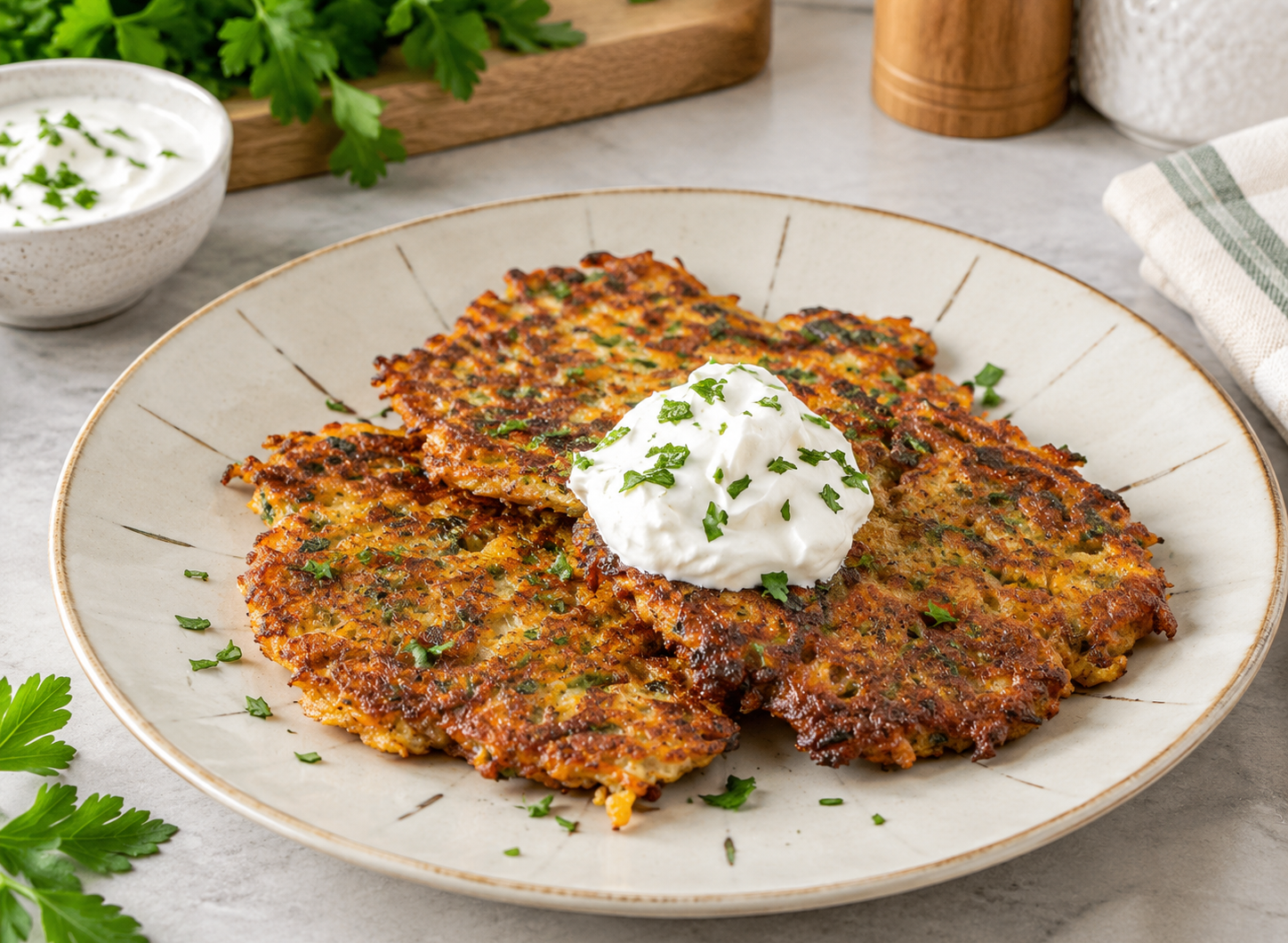
These easy Vegetable Pancakes are made with 2 cups of shredded mixed vegetables, eggs, whole-wheat flour, and salt. The mixture is cooked in a thin layer of olive oil until the pancakes are lightly browned outside and tender inside. Serve them warm with optional sour cream or applesauce.
2
servings5
minutes10
minutes192
kcal15
minutesIngredients
2 cups mixed vegetables, shredded
2 eggs
1 tablespoon whole-wheat flour
¼ teaspoon salt
Olive oil, for cooking
Sour cream, optional garnish
Applesauce, optional garnish
Directions
- Mix the ingredients: Combine the shredded mixed vegetables, eggs, whole-wheat flour, and salt in a bowl. Mix thoroughly until everything is evenly combined.
- Heat the pan: Add a thin layer of olive oil to a sauté pan and heat over medium heat. Make sure the pan is hot enough to cook the pancakes through without browning them too quickly.
- Add the mixture: Place pancake-sized portions of the vegetable mixture into the hot pan. Shape each portion into an even pancake.
- Cook both sides: Cook for several minutes until the bottom begins to brown. Carefully flip each pancake and cook the other side until lightly browned and cooked through.
- Drain: Transfer the cooked pancakes to a plate lined with paper towels to remove excess oil.
- Serve: Serve the vegetable pancakes warm with sour cream and/or applesauce as optional garnishes.
Notes
- Calories from Fat: 45 kcal
Nutrition Facts
- Calories: 192kcal
- Fat: 5g
- Carbohydrates: 27g
- Fiber: 8g
- Sugar: 1g
- Protein: 12g
