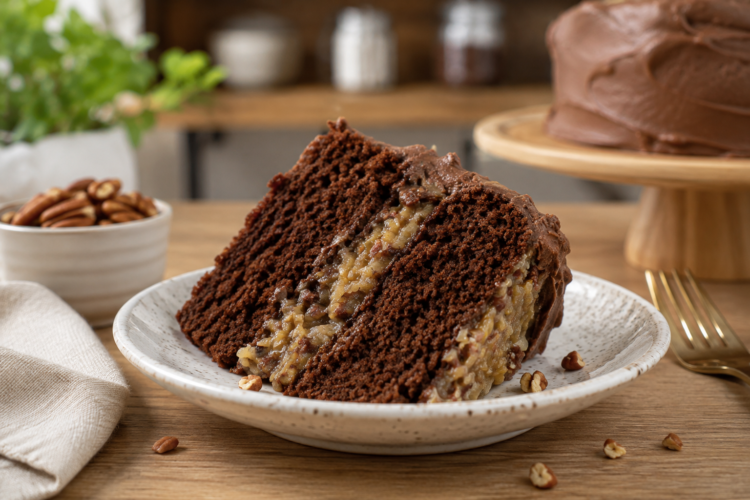
This gluten-free German chocolate cake is a rich homemade dessert with layers of moist chocolate cake, coconut caramel filling, and smooth chocolate buttercream. The cake uses a gluten-free 1:1 baking flour, so you can enjoy the classic combination without traditional wheat flour. It is a generous dessert made for birthdays, holidays, family gatherings, and other special occasions.
What Makes This Cake Special
German chocolate cake is known for its combination of chocolate, coconut, and pecans, and this gluten-free version keeps those flavors together in every layer. The cake itself has a soft chocolate crumb, while the coconut caramel filling adds sweetness, texture, and a buttery finish. Chocolate buttercream surrounds the cake and gives the dessert a rich, creamy coating.
Why Use Gluten-Free Flour
The recipe uses gluten-free 1:1 baking flour, which makes it easier to replace regular flour without changing the basic baking method. A 1:1 blend is designed to work in recipes that normally use wheat flour. Using the specified gluten-free blend also keeps the ingredient balance consistent, helping the cake rise properly and maintain a tender texture after baking.
Preparing the Cake Pans
Start by heating the oven to 350°F and preparing two 8-inch round cake pans. Grease the pans thoroughly so the cake layers release easily after baking. Lining the bottoms with parchment paper provides extra protection against sticking. Grease the parchment as well, giving the cake layers a clean surface for removal and making the later assembly much easier.
Mixing the Dry Ingredients
In a medium bowl, whisk together the gluten-free baking flour, unsweetened cocoa powder, baking powder, and salt. This step evenly distributes the cocoa and leavening ingredients throughout the flour. Proper mixing at this stage helps prevent pockets of baking powder or salt from forming in the finished cake and gives the batter a more consistent texture.
Whipping the Eggs and Sugar
Place the eggs and sugar into the bowl of a stand mixer and beat them on medium-high speed for about three minutes. The mixture should become light and fluffy. This step incorporates air into the batter, which helps support the cake’s structure. Take your time when adding the oil afterward because adding it slowly helps preserve some of the air created during mixing.
Adding the Wet Ingredients
With the mixer running on low, slowly drizzle in the vegetable oil. Once incorporated, mix in the vanilla extract and lemon juice. These ingredients add flavor and help balance the richness of the chocolate cake. The lemon juice is used in a small quantity, so it does not make the cake taste strongly of lemon.
Combining the Batter
The dry and wet ingredients are combined gradually rather than all at once. Add one-third of the dry mixture and mix until incorporated. Add the sour cream, followed by another third of the dry ingredients. Next, add half of the milk, then the final third of the dry ingredients, and finish with the remaining milk.
Why Alternate the Ingredients
Adding the flour mixture and liquids in stages helps the batter come together evenly. Pouring everything into the bowl at once can make mixing more difficult and may encourage overmixing. Alternating the dry ingredients with the sour cream and milk allows the flour to absorb the liquid gradually. This produces a smoother batter and supports a tender gluten-free cake texture.
Baking the Chocolate Cake
Divide the finished batter evenly between the prepared 8-inch pans. Bake at 350°F for approximately 35 to 40 minutes. The cakes are ready when they look golden and a toothpick inserted into the center comes out clean. Start preparing the coconut caramel filling while the cake layers bake so the filling has time to cool before the cake is assembled.
Cooling the Cake Layers
Let the baked cakes remain in their pans for about 15 minutes. After this short cooling period, carefully turn them out onto a wire rack. Allow the layers to cool completely before adding frosting or filling. Warm cake layers can soften the buttercream and make the coconut caramel filling difficult to spread, so complete cooling is an important part of the process.
Making the Coconut Caramel Filling
The coconut caramel filling is the signature component of German chocolate cake. Combine the brown sugar, granulated sugar, salt, butter, egg yolks, and evaporated milk in a medium saucepan. Stir the mixture together and cook it over medium heat until it reaches a low boil. Continue stirring constantly for several minutes while the mixture begins to thicken.
Adding Coconut and Pecans
Once the caramel mixture has thickened, remove the saucepan from the heat. Stir in the vanilla extract, chopped pecans, and sweetened shredded coconut. The pecans provide a pleasant crunch, while the coconut gives the filling its familiar German chocolate cake texture. Allow the mixture to cool completely before spreading it between the cake layers.
Why the Filling Must Cool
The coconut caramel mixture should no longer feel warm when it is used on the cake. Warm filling can soften the buttercream and make the layers slide. Cooling also allows the mixture to become thicker and easier to spread. If you prepare the filling while the cake is baking, it has enough time to cool naturally before assembly.
Making Chocolate Buttercream
The chocolate buttercream provides a smooth contrast to the textured coconut filling. Begin by placing the unsweetened cocoa powder in a mixing bowl and blending it briefly to remove lumps. Add the softened butter and beat until the mixture becomes smooth. Add the confectioners’ sugar, heavy cream or milk, salt, vanilla extract, and almond extract.
Creating a Smooth Frosting
Mix the buttercream on low speed until the ingredients are incorporated. Then increase the mixer to medium speed and beat until the frosting becomes light and fluffy. The frosting should be smooth enough to spread around the cake and firm enough to pipe around the edges. If you use softened butter rather than melted butter, the frosting will be easier to control during assembly.
Building the First Layer
Place one completely cooled cake layer on a serving tray or cake platter. Use some of the chocolate buttercream to create a border around the outside edge. This border acts like a wall that helps keep the coconut caramel filling in place. Spread half of the cooled coconut caramel filling inside the buttercream border.
Adding the Second Cake Layer
Carefully place the second cake round on top of the first filled layer. Check that the cake is centered before continuing. Use the remaining chocolate buttercream to cover the top and sides of the entire cake. Work gently around the edges so the coconut filling remains contained between the layers and the chocolate frosting creates an even outer finish.
Finishing the German Chocolate Cake
Spread the remaining coconut caramel filling over the top of the frosted cake. You can pipe additional chocolate buttercream around the outer edge if you want a decorative finish. The contrast between the dark chocolate frosting, pale coconut, and chopped pecans gives the finished cake the recognizable appearance associated with German chocolate cake.
Getting Clean Cake Layers
For cleaner layers, allow both cake rounds to cool completely before beginning. If the tops have risen unevenly, they can be handled carefully before assembly, but avoid unnecessary trimming if the layers are already level. Keeping the cake centered while stacking also helps prevent the filling from pushing outward and makes the finished dessert easier to slice.
Serving the Cake
Once assembled, the cake can be sliced and served. A sharp knife helps create cleaner portions through the chocolate buttercream and coconut caramel filling. Because this is a rich dessert, modest slices are often enough. The combination of sweet coconut, buttery pecans, chocolate cake, and chocolate frosting provides several textures and flavors in each serving.
Choosing the Right Occasion
This gluten-free chocolate cake works especially well for birthdays, family celebrations, holiday dinners, and weekend gatherings. Its two types of frosting make it look more elaborate than a simple sheet cake, while the preparation remains manageable when broken into separate stages. The cake layers, coconut filling, and buttercream can each be prepared carefully before the final assembly.
Keeping the Cake Moist
Sour cream, milk, eggs, and vegetable oil all contribute moisture to the cake batter. Sour cream is especially useful because it adds richness while keeping the crumb tender. The combination of these ingredients helps prevent the chocolate cake from becoming dry. Accurate measuring is still important because changing the flour or liquid balance can affect the final texture.
Working With Pecans
Chopped pecans are mixed directly into the coconut caramel filling. Their slightly crisp texture provides contrast against the soft cake and creamy frosting. Chop the pecans into manageable pieces so they distribute evenly through the filling. Very large pieces can make the layers harder to slice, while smaller pieces give you a little pecan flavor throughout each serving.
Working With Coconut
Sweetened shredded coconut gives the filling its characteristic texture and sweetness. Because it is added after the caramel mixture is removed from the heat, it remains visible rather than completely disappearing into the sauce. Stir the coconut through thoroughly so it is distributed across the filling instead of collecting in one area.
Gluten-Free Baking Tips
Gluten-free cake batter can behave differently from traditional wheat-based batter, which is why following the listed flour quantity is important. Use the specified gluten-free 1:1 baking flour and measure it carefully. Avoid adding extra flour simply because the batter looks softer than a conventional cake batter. The liquid ingredients are part of the recipe’s intended balance.
Avoiding a Dense Cake
Beating the eggs and sugar until light and fluffy helps introduce air before the remaining ingredients are incorporated. Add the oil slowly and mix the batter only as much as needed. Alternating the dry ingredients and liquids also reduces the need for excessive mixing. These steps help the gluten-free cake maintain a lighter texture rather than becoming heavy.
Avoiding a Dry Cake
Accurate baking time is important when making a chocolate cake. Start checking the layers around the end of the recommended baking period rather than leaving them in the oven unnecessarily. A toothpick inserted into the center should come out clean. Once baked, remove the layers from the pans after the recommended cooling period so they can continue cooling on a wire rack.
Preparing the Filling in Advance
The coconut caramel filling needs to cool completely before it is placed on the cake. Preparing it while the cake layers are in the oven is a convenient way to use the baking time efficiently. Once the mixture has thickened and the coconut and pecans have been added, set it aside to cool. Do not spread the filling while it is still warm.
Preparing the Buttercream
The chocolate frosting is easiest to work with when the butter has softened naturally to room temperature. Avoid using melted butter because the frosting needs enough structure for spreading and piping. Begin mixing the cocoa powder before adding the butter to reduce lumps. Once all ingredients are incorporated, beat the frosting until it becomes smooth and fluffy.
Balancing the Sweetness
This cake contains sugar in the chocolate cake, coconut caramel filling, and buttercream. The unsweetened cocoa powder adds a deeper chocolate flavor that balances some of the sweetness. Salt is included in both the cake and the filling, helping round out the overall flavor. The almond and vanilla extracts in the buttercream add additional depth without overpowering the chocolate.
Storing the Finished Cake
Once assembled, keep the cake protected from heat and direct sunlight. The chocolate buttercream and coconut caramel filling contain dairy and egg-based ingredients, so appropriate storage is important. If preparing the cake ahead of serving, keep it covered and chilled as appropriate for the ingredients. Allowing it to sit briefly before serving can make the frosting easier to slice while keeping the cake moist.
Making the Cake Easier to Assemble
Breaking the recipe into three parts makes the process much more manageable. Bake the chocolate cake layers first, prepare the coconut caramel filling while they are in the oven, and make the chocolate buttercream separately. Once all three components have cooled or reached the correct consistency, the final assembly is straightforward. This approach also reduces the chance of trying to frost a warm cake.
Common Baking Problems
If the cake layers are difficult to remove, the pans may not have been greased thoroughly enough. If the frosting is too soft, the butter may have been too warm or the cake may not have cooled completely. If the coconut caramel filling moves when the second layer is placed on top, it may still be warm or the buttercream border may not be high enough. Cooling each component properly helps prevent these problems.
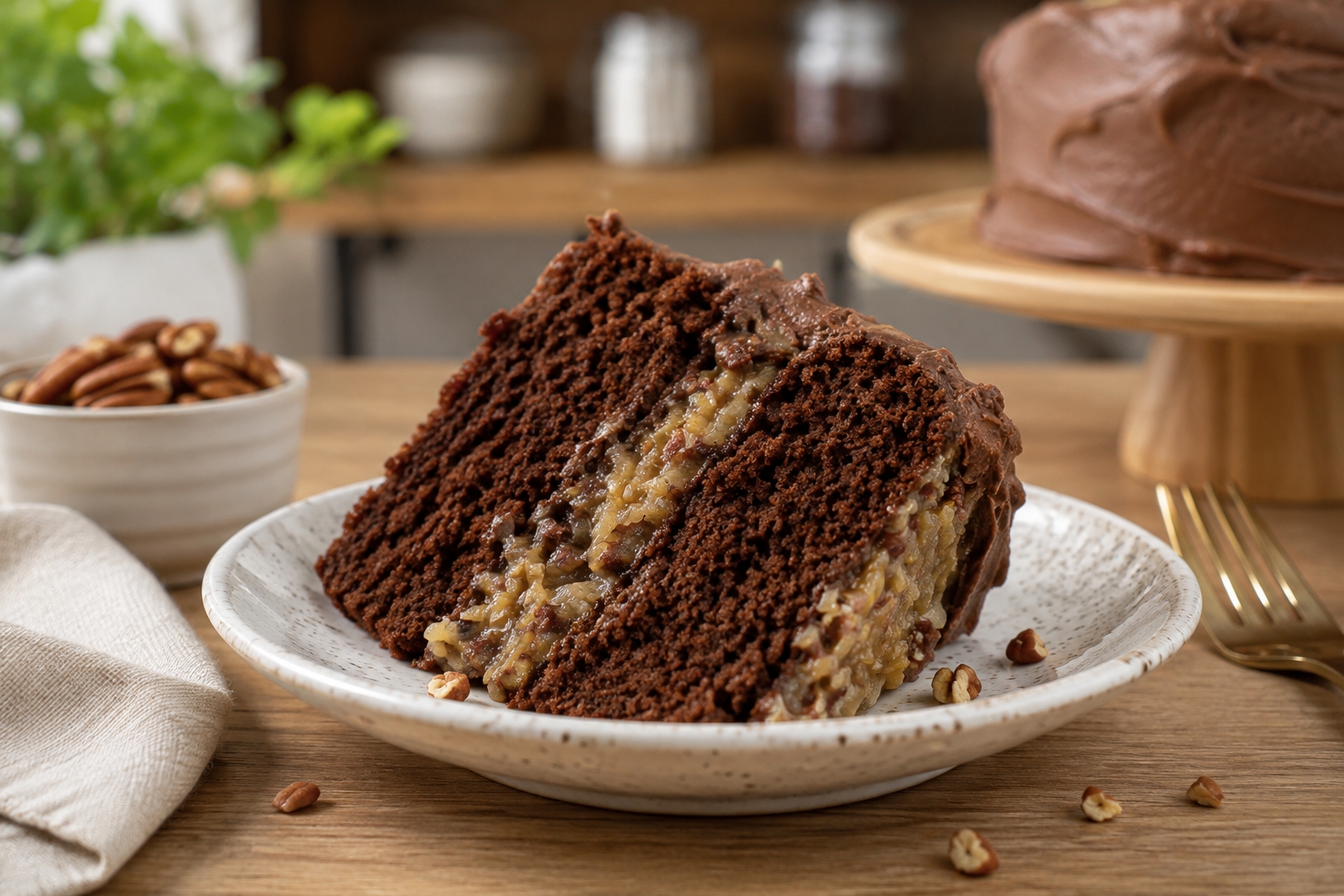
Gluten Free German Chocolate Cake
A rich gluten-free German chocolate cake made with moist chocolate cake layers, a coconut caramel filling with pecans, and smooth chocolate buttercream frosting. It is a classic-style dessert for birthdays, holidays, and special gatherings.
12
servings10
minutes1
hour14
minutes755
kcal1
hour24
minutesIngredients
- Chocolate Cake:
1¾ cups gluten-free 1:1 baking flour (270 grams)
3 teaspoons baking powder
½ cup unsweetened cocoa powder (50 grams)
1 teaspoon salt
1¾ cups sugar (380 grams)
3 eggs
½ cup vegetable oil (100 grams)
1 tablespoon vanilla extract
1 teaspoon lemon juice
½ cup sour cream (120 grams), regular or light
1 cup milk (250 ml), 2%
- Coconut Caramel Filling:
4 large egg yolks
1 cup evaporated milk (236 ml)
8 tablespoons butter, cut into 8 pieces
½ cup granulated sugar (100 grams)
½ cup light brown sugar, firmly packed (100 grams)
¼ teaspoon salt
1 teaspoon vanilla extract
1 cup chopped pecans (125 grams)
2 cups sweetened shredded coconut (160 grams)
- Chocolate Buttercream Frosting:
⅓ cup unsweetened cocoa powder (35 grams)
½ cup butter, softened to room temperature
3–4 cups confectioners’ sugar (340–450 grams)
¼ cup heavy cream or milk
¼ teaspoon salt
2 teaspoons pure vanilla extract
¼ teaspoon almond extract
Directions
- Preheat the oven to 350°F and grease two 8-inch round cake pans. Line the bottoms with parchment paper and grease the parchment. Whisk the gluten-free flour, cocoa powder, baking powder, and salt in a bowl.
- Beat the eggs and sugar in a stand mixer on medium-high for 3 minutes until light and fluffy. Slowly drizzle in the oil on low speed, then mix in the vanilla and lemon juice. Add the dry ingredients in thirds, alternating with the sour cream and milk, until the batter is fully combined.
- Divide the batter between the prepared pans and bake for 35–40 minutes, until golden and a toothpick inserted in the centers comes out clean. Cool in the pans for 15 minutes, then transfer to a wire rack and cool completely.
- For the coconut caramel filling, combine the brown sugar, granulated sugar, salt, butter, egg yolks, and evaporated milk in a saucepan. Bring to a low boil over medium heat while stirring constantly. Continue cooking for several minutes until thickened, then remove from the heat and stir in vanilla, pecans, and coconut. Cool completely.
- For the chocolate buttercream, mix the cocoa powder to remove lumps. Add the softened butter and beat until smooth. Add the confectioners’ sugar, cream or milk, salt, vanilla, and almond extract. Mix on low until combined, then beat on medium until light and fluffy.
- Place one cooled cake layer on a serving platter. Pipe or spread a chocolate frosting border around the edge and fill the center with half of the coconut caramel mixture.
- Add the second cake layer, cover the top and sides with the remaining chocolate frosting, then spread the remaining coconut caramel filling over the top. Add decorative chocolate frosting around the edges if desired.
Notes
- Keep the cake layers and coconut caramel filling completely cool before assembly so the chocolate buttercream remains stable.
- Alternate the dry ingredients with the sour cream and milk when mixing the cake batter to help the ingredients combine evenly.
- Stir the coconut caramel mixture constantly while it cooks so the egg yolks and dairy blend smoothly and the mixture thickens properly.
- Use softened, not melted, butter for the chocolate buttercream so the frosting has enough structure for spreading and piping.
- Allow the finished cake to settle before slicing so the layers remain together and the filling stays in place.
Nutrition Facts
- Total number of serves: 1
- Calories: 755kcal
- Fat: 36g
- Carbohydrates: 104g
- Fiber: 5g
- Sugar: 87g
- Protein: 10g
