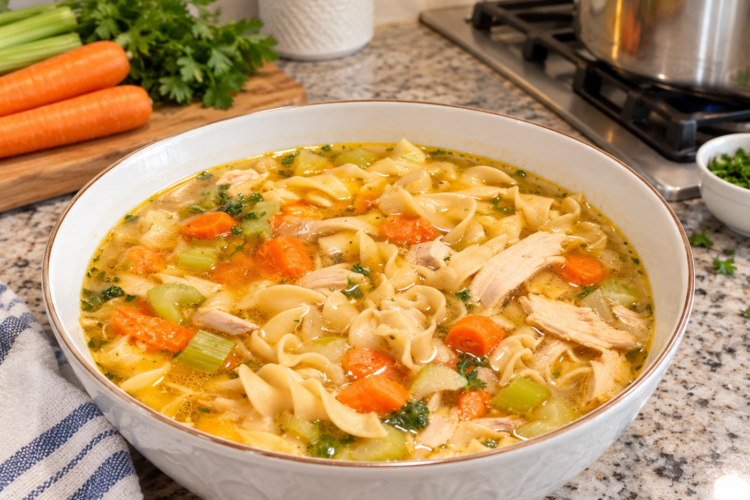
Chicken noodle soup is a classic comfort food that brings together tender chicken, soft egg noodles, flavorful broth, and fresh vegetables in one satisfying bowl. This easy chicken noodle soup recipe delivers the taste of homemade soup without requiring hours of preparation. By using rotisserie chicken and low-sodium chicken broth, you can prepare a delicious, hearty meal with simple ingredients and a practical cooking method that works well for busy weekdays, chilly evenings, or days when you want something warm and comforting.
What makes this homemade chicken noodle soup especially appealing is the balance of flavor and texture. The carrots and celery become tender while maintaining their shape, the onions and garlic add depth to the broth, and the shredded chicken makes every serving filling. Fresh thyme and bay leaves bring a gentle herbal aroma, while chopped parsley or dill adds freshness at the end. A little freshly squeezed lemon juice is optional, but it can brighten the entire soup and give the savory broth a more balanced taste.
Unlike traditional chicken soup recipes that begin with a whole raw chicken and require a long simmering time, this quick chicken noodle soup uses already-cooked chicken to simplify the process. You still get the comforting flavor of a homemade meal, but with less preparation and fewer steps. The noodles cook directly in the soup, allowing them to absorb some of the broth’s flavor while keeping the cooking process straightforward. In approximately 40 to 45 minutes, you can have a generous pot of soup ready to serve.
Why You Will Love This Homemade Chicken Noodle Soup
One of the biggest advantages of this easy chicken noodle soup recipe is its convenience. Rotisserie chicken provides tender, flavorful meat without requiring separate cooking, cooling, and shredding of raw chicken. This shortcut makes the recipe especially useful when you need a dependable family dinner but do not want to spend a long time in the kitchen. With prepared chicken, pantry-friendly broth, and everyday vegetables, the soup comes together with very little effort.
Another reason to make this recipe is its satisfying combination of ingredients. The wide egg noodles give the soup a hearty texture, while carrots, celery, and onions contribute flavor and color. Garlic enhances the savory base, and thyme and bay leaves provide an aromatic quality that makes the broth taste more developed. Each ingredient serves a purpose, creating a soup that feels complete without needing complicated seasonings, heavy sauces, or additional ingredients.
This chicken noodle soup is also easy to adjust according to your serving plans. You can prepare it for a family lunch, serve it as a cozy evening meal, or make a pot ahead of time for several meals throughout the week. The recipe yields approximately 10 cups, making it suitable for six to eight servings depending on portion size. If you expect leftovers, you can cook the noodles separately to help preserve their texture.
The finishing touches make a noticeable difference, too. Fresh parsley or dill brings a clean, herbal flavor, while lemon juice adds a little acidity that balances the richness of the chicken broth. These simple additions help the soup taste fresh rather than heavy. Because the final seasoning can be adjusted after simmering, you can easily achieve a broth that suits your taste without changing the original ingredient list.
Key Ingredients for Chicken Noodle Soup
Rotisserie Chicken
Rotisserie chicken is the main shortcut that makes this recipe fast and convenient. Since the chicken is already cooked, you only need to remove the meat from the bones and shred it into bite-sized pieces before adding it to the soup. The meat contributes a savory flavor and tender texture, making it a practical alternative to cooking chicken from scratch. Approximately three cups of shredded chicken provide a generous amount of protein and substance throughout the pot.
If you purchase a rotisserie chicken weighing between two and a half and three pounds, you can use the meat needed for the soup and save any remaining portions for another meal. Removing the skin and bones before shredding makes it easier to portion the meat evenly. Using cooked chicken also reduces the risk of overcooking the meat during the soup-making process, since it only needs to heat through while the noodles finish cooking.
Unsalted Butter or Olive Oil
Butter or olive oil creates the flavorful foundation for the vegetables. Heating the butter or oil before adding the onion, carrots, celery, and garlic helps soften the vegetables and release their natural aromas. Butter gives the soup a slightly richer taste, while olive oil provides a useful alternative if you prefer not to use dairy in the cooking fat.
Whichever option you choose, allow the vegetables to cook gently rather than browning them heavily. The goal is to soften the onion and begin developing flavor while keeping the carrots and celery colorful. This first step may seem simple, but it helps build the savory base that makes the finished chicken noodle soup taste satisfying.
Onion, Carrots, Celery, and Garlic
These vegetables are essential to the flavor of traditional chicken noodle soup. Yellow onion adds sweetness and depth, carrots contribute a mild natural sweetness, and celery gives the broth a fresh, savory character. Garlic adds another layer of flavor that complements the chicken and herbs without overpowering the other ingredients.
Cutting the carrots and celery into pieces approximately half an inch thick helps them maintain their shape during cooking. Smaller pieces may become too soft, particularly if the soup continues to simmer after the noodles are added. Keeping the vegetables reasonably uniform in size also helps them cook more evenly. Cooking them with the onion and garlic before adding the broth allows their flavors to blend into the soup from the beginning.
Low-Sodium Chicken Broth
Chicken broth provides the liquid base for this easy soup. The recipe uses two 32-ounce cartons, giving you eight cups of broth for a generous batch. Choosing low-sodium chicken broth allows you to control the final salt level more easily, especially because rotisserie chicken can already contain a noticeable amount of seasoning.
As the broth heats with the vegetables, thyme, and bay leaves, it takes on their flavors and develops a comforting aroma. Homemade chicken stock can also be used if you have it available, but prepared broth keeps the recipe quick and accessible. Before serving, taste the finished soup and adjust the salt as needed rather than adding extra seasoning automatically.
Extra-Wide Egg Noodles
Extra-wide egg noodles make this recipe a hearty chicken noodle soup rather than simply a chicken and vegetable broth. Their broad shape gives each spoonful a satisfying texture, and cooking them directly in the pot allows them to absorb the flavors of the broth. The noodles also release some starch as they cook, which can give the soup a slightly fuller consistency.
The key is to avoid overcooking them. Begin checking the noodles after approximately six minutes, or follow the package directions and stop about one minute before the recommended cooking time. The noodles will continue softening slightly in the hot broth, so removing the pot from the heat at the right time helps keep them pleasantly tender instead of mushy.
Fresh Thyme and Bay Leaves
Thyme and bay leaves give the broth a traditional, aromatic flavor. Fresh thyme contributes a gentle herbal note that works especially well with chicken, carrots, and celery. Bay leaves provide a deeper background flavor that develops as the soup simmers.
These herbs are added while the broth heats, allowing their flavor to spread throughout the pot. Because they are intended to season the liquid rather than be eaten, remove the thyme sprigs and bay leaves before serving. This keeps the finished soup easy to eat and prevents anyone from accidentally biting into a tough bay leaf.
Fresh Parsley or Dill and Lemon Juice
Fresh herbs and lemon juice are added toward the end of cooking to preserve their bright character. Parsley offers a clean, familiar flavor, while dill provides a more distinctive herbal note. Either works well with chicken noodle soup, so you can choose the option you prefer while keeping the recipe’s original ingredient choices intact.
Freshly squeezed lemon juice is optional, but it can make a real difference to the final flavor. Its acidity balances the savory broth and makes the soup taste lighter and fresher. Add it after removing the pot from the heat, then stir and taste. A small adjustment at this stage can help bring the flavors together without making the soup taste strongly of lemon.
How to Make Easy Chicken Noodle Soup
Step 1: Prepare the Vegetables and Chicken
Before you begin cooking, dice the yellow onion, peel and slice the carrots, and cut the celery into half-inch pieces. Mince the garlic and shred the cooked rotisserie chicken, measuring approximately three cups for the soup. Chop the parsley or dill and squeeze the lemon juice if you plan to use it. Preparing everything in advance makes the cooking process smoother and helps prevent the vegetables or noodles from being left unattended.
Use a large Dutch oven or another heavy-bottomed pot with enough capacity for the broth, chicken, vegetables, and noodles. A heavy pot distributes heat more evenly, reducing the likelihood of scorching the vegetables while they soften. Having the ingredients ready also makes it easier to monitor the noodles later, when timing becomes especially important for achieving the right texture.
Step 2: Sauté the Aromatic Vegetables
Place the pot over medium heat and melt the unsalted butter, or heat the olive oil. Add the diced onion, sliced carrots, celery, minced garlic, kosher salt, and freshly ground black pepper. Stir occasionally as the vegetables cook for approximately five minutes. The onion should become translucent, and the vegetables should begin to soften without becoming completely tender or developing excessive browning.
This stage creates the foundation of the soup’s flavor. Instead of adding the vegetables directly to cold broth, cooking them in the butter or oil allows their aromas to develop before the liquid is introduced. Keep the heat moderate and stir as needed so the garlic does not burn. Once the onion is translucent and the mixture smells fragrant, the vegetables are ready for the next step.
Step 3: Add the Chicken Broth and Herbs
Pour the low-sodium chicken broth into the pot, then add the fresh thyme sprigs and dried bay leaves. Stir gently to combine the broth with the sautéed vegetables, scraping the bottom of the pot if necessary to incorporate the flavorful residue left from cooking. Increase the heat to medium-high and bring the liquid to a boil.
Once the broth reaches a boil, the vegetables begin releasing more of their flavor into the liquid, while the thyme and bay leaves add their aromatic qualities. Watch the pot as it heats to prevent the broth from boiling over. You do not need a prolonged simmer at this stage because the chicken is already cooked and the noodles will finish the soup shortly afterward.
Step 4: Add the Shredded Chicken and Egg Noodles
Stir the shredded chicken and extra-wide egg noodles into the boiling broth. Reduce the heat to maintain a gentle simmer, making sure the liquid continues bubbling lightly without boiling too aggressively. Cook for approximately six to seven minutes, or about one minute less than the package instructions recommend for the noodles.
Stir occasionally to prevent the noodles from sticking together or settling at the bottom of the pot. Check the noodles toward the end of the cooking time because different brands and thicknesses may cook at slightly different rates. They should be nearly tender but still hold their shape. Since the soup remains hot after cooking, stopping just before the noodles reach full tenderness helps avoid an overly soft texture.
Step 5: Remove the Herbs and Adjust the Seasoning
When the noodles are almost done, remove the thyme sprigs and bay leaves. Taste the broth carefully and add more kosher salt if necessary. Because the recipe uses low-sodium broth, the final seasoning can be adjusted according to your preference. Remember that rotisserie chicken may already be seasoned, so tasting before adding more salt is the best way to maintain a balanced flavor.
If the broth seems slightly flat, check the seasoning before deciding what it needs. Sometimes a little more salt is enough to bring out the existing flavors. If you want a brighter finish, the optional lemon juice can provide a useful contrast to the savory chicken and vegetables. Make small adjustments rather than adding large amounts of seasoning at once.
Step 6: Finish with Fresh Herbs and Lemon
Remove the pot from the heat and stir in the finely chopped parsley or dill. If desired, add the freshly squeezed lemon juice and mix gently to distribute it throughout the soup. Adding the herbs at the end helps retain their fresh aroma and green color, while the lemon brings a clean, bright finish to the broth.
Let the soup settle briefly before serving so the ingredients are evenly distributed. Ladle the hot soup into bowls, making sure each serving contains chicken, noodles, carrots, and celery. The finished dish should have a flavorful broth, tender vegetables, and noodles that remain intact. Serve it while warm for a comforting lunch or dinner that is easy to prepare and satisfying to eat.
How to Make Chicken Noodle Soup More Flavorful
Build Flavor from the Beginning
The best way to improve chicken noodle soup is to develop flavor at every stage rather than relying on extra seasoning at the end. Cooking the onion, carrots, celery, and garlic in butter or olive oil gives them a chance to release their aromas. Adding the broth only after the vegetables have softened helps create a more developed base, while thyme and bay leaves contribute a gentle herbal flavor during simmering.
Using low-sodium broth is helpful because it leaves room to adjust the seasoning after the chicken and noodles have been added. Salt enhances the natural flavors of the vegetables and broth, but adding too much early can make the finished soup overly salty as the liquid cooks. Seasoning in stages and tasting near the end gives you better control over the result.
Use Fresh Herbs for a Brighter Finish
Fresh parsley and dill offer different but equally useful ways to finish chicken noodle soup. Parsley gives the broth a fresh, clean taste that complements the chicken, while dill adds a more noticeable herbal character. Adding the chopped herbs shortly before serving helps keep their flavor lively instead of allowing them to cook for an extended period.
If the soup tastes rich but lacks freshness, the combination of herbs and lemon juice can help balance it. The lemon does not need to dominate the flavor; its purpose is to add enough acidity to make the other ingredients stand out. Since the amount of lemon juice can be adjusted to personal preference, start with the recipe’s stated quantity and taste before making any further changes.
Keep the Vegetables Tender but Not Mushy
Vegetable texture has a major influence on the overall quality of chicken noodle soup. Carrots and celery that are cut into reasonably thick pieces are more likely to maintain their shape during the short cooking period. Sautéing them for approximately five minutes before adding broth softens them slightly, while the remaining cooking time finishes the job without requiring a long simmer.
Avoid cooking the soup for much longer than necessary once the noodles have been added. Egg noodles continue absorbing liquid as they sit in the hot broth, and the vegetables also soften further over time. If you plan to serve the soup immediately, monitor the noodles closely and remove the pot from the heat as soon as they reach the desired texture.
The Best Way to Cook Egg Noodles for Soup
Egg noodles are a defining ingredient in traditional chicken noodle soup, but they need a little attention to maintain their texture. Cooking them directly in the broth is convenient because it saves an extra pot and allows them to absorb the savory liquid. However, the noodles continue to soften after cooking, especially when they remain submerged in hot broth during storage or reheating.
For a soup that will be eaten immediately, cooking the noodles in the pot works very well. Follow the recipe’s timing and begin checking for tenderness before the noodles become fully soft. For a meal planned in advance, cooking the noodles separately is usually the better option. Prepare them according to the package instructions, stopping approximately one minute early, then add them to individual bowls or portions of soup when serving.
Keeping the noodles separate also makes leftover soup easier to store. Without noodles absorbing the broth overnight, the chicken and vegetable mixture retains more of its liquid and is less likely to become thick or starchy. When you are ready to eat, warm the soup and combine it with the prepared noodles. This small adjustment is particularly helpful if you want the soup to taste freshly made over several days.
Serving Suggestions for Homemade Chicken Noodle Soup
This homemade chicken noodle soup is satisfying enough to serve on its own, especially when you want a warm and comforting meal without preparing multiple dishes. A bowl provides a combination of chicken, vegetables, noodles, and broth, making it a convenient option for lunch or dinner. Serve it hot in a deep bowl so the broth stays warm while you eat, and ensure the chicken and vegetables are evenly distributed between portions.
For a more substantial meal, you can serve the soup alongside bread or another simple accompaniment if it suits your dietary preferences. The soup’s savory flavor works well with a plain side that does not compete with the herbs and broth. However, extra accompaniments are entirely optional because the recipe already includes several filling ingredients and can be served as a complete meal.
The recipe is also suitable for a family meal because the serving size is flexible. Six generous portions provide a hearty serving, while eight smaller portions work well for lunch or as part of a larger meal. If you are serving guests, finish the soup with a little extra chopped parsley or dill immediately before bringing it to the table. This adds a fresh appearance without changing the basic recipe.
How to Store and Reheat Chicken Noodle Soup
Refrigerating Leftovers
Allow leftover soup to cool slightly before transferring it to airtight containers. Refrigerate it promptly rather than leaving it at room temperature for an extended period. The soup can be refrigerated for up to four days when stored properly. Smaller containers can make it easier to reheat individual portions without warming the entire batch repeatedly.
If you have prepared the noodles separately, store them apart from the broth, chicken, and vegetables. This helps prevent them from soaking up excessive liquid and becoming overly soft. If the noodles have already been cooked in the soup, the leftovers will still be enjoyable, but the broth may become thicker as the noodles absorb liquid during refrigeration.
Reheating for the Best Texture
Reheat the soup gently in a saucepan over medium-low to medium heat, stirring occasionally until it is steaming hot throughout. If the broth has thickened because the noodles absorbed some of the liquid, you may notice a different consistency from when it was freshly prepared. Gentle heating helps warm the ingredients evenly without unnecessarily breaking apart the noodles or vegetables.
For soup stored without noodles, heat the broth, chicken, and vegetables first, then add the prepared noodles and allow them to warm through. Avoid prolonged boiling because it can make the noodles too soft and cause the vegetables to lose their shape. If reheating a single serving, use a suitable microwave-safe container and stir during heating to distribute the heat evenly.
Helpful Notes for Making Chicken Noodle Soup
Can You Use Leftover Cooked Chicken?
Yes, cooked boneless chicken can be used instead of rotisserie chicken. The recipe allows approximately one pound of cooked, boneless chicken, shredded to provide about three cups. This is a useful way to use leftover chicken from a previous meal while keeping preparation quick. Add the cooked chicken when the broth is ready, along with the noodles, and allow it to heat thoroughly before serving.
Can You Prepare the Soup Ahead of Time?
You can prepare the soup ahead of time, but keeping the noodles separate is the best way to maintain their texture. Cook the chicken, vegetables, broth, and herbs as directed, then prepare the noodles separately and store them apart from the soup. When serving, reheat the broth mixture and add the noodles. This approach is especially useful for meal preparation because it helps the soup remain appealing over several days.
Why Does Chicken Noodle Soup Sometimes Taste Bland?
A soup that tastes bland may need more seasoning or a little acidity rather than additional ingredients. Taste the broth after the chicken and noodles have finished cooking, then add kosher salt gradually if needed. Fresh parsley or dill adds a herbal note, while the optional lemon juice helps balance the savory flavors. Using these finishing touches thoughtfully can make the broth taste more complete without overpowering the chicken.
How Can You Prevent Mushy Noodles?
The most reliable method is to cook the noodles for about one minute less than the package instructions recommend, then remove the pot from the heat. If the soup will be stored for later, prepare the noodles separately and add them when serving. This prevents them from continuously absorbing broth while refrigerated and reduces the chance of having soft, broken noodles in leftover portions.
Can You Make the Soup Without Butter?
Yes. Olive oil is already included as an alternative to unsalted butter in the original recipe. Use the same two-tablespoon quantity when sautéing the vegetables. Olive oil helps soften the vegetables and develop the aromatic base while keeping the cooking process simple. If you want the finished dish to be dairy-free, check the labels on your broth, noodles, and other packaged ingredients as well.

Chicken Noodle Soup Recipe
A comforting homemade soup with shredded rotisserie chicken, egg noodles, tender vegetables, aromatic herbs, and a bright lemon finish.
6
servings15
minutes25
minutes40
minutesIngredients
2 tablespoons unsalted butter or olive oil
1 large yellow onion, diced (2 cups)
3 medium carrots, peeled and cut crosswise into 1/2-inch thick rounds (1 3/4 cups)
3 medium stalks celery, cut crosswise into 1/2-inch thick pieces (1 1/4 cups)
3 cloves garlic, minced
2 1/2 teaspoons kosher salt, plus more as needed
1/2 teaspoon freshly ground black pepper
2 (32-ounce) cartons low-sodium chicken broth (8 cups)
5 sprigs fresh thyme
2 dried bay leaves
1 (2 1/2- to 3-pound) rotisserie chicken, or about 1 pound cooked, boneless chicken, shredded (3 cups)
6 ounces dried extra-wide egg noodles (about 3 1/4 cups)
1/4 cup finely chopped fresh parsley or dill (from 1/2 medium bunch)
2 tablespoons freshly squeezed lemon juice (from 1/2 large lemon), optional
Directions
- Sauté the vegetables.
Melt the butter or heat the olive oil in a Dutch oven or heavy-bottomed pot over medium heat. Add the onion, carrots, celery, garlic, kosher salt, and black pepper. Cook for approximately 5 minutes, stirring occasionally, until the onion becomes translucent. - Add the broth and herbs.
Pour in the chicken broth and add the fresh thyme sprigs and dried bay leaves. Increase the heat to medium-high and bring the mixture to a boil. - Cook the chicken and noodles.
Stir in the shredded chicken and egg noodles. Reduce the heat to maintain a gentle simmer and cook for 6–7 minutes, or about one minute less than the noodle package instructions recommend. - Remove the whole herbs.
Take out and discard the thyme sprigs and bay leaves. Taste the broth and add more kosher salt if needed. - Finish and serve.
Stir in the chopped parsley or dill and add the lemon juice if desired. Mix well and serve the soup hot.
Notes
- For meal prep: Cook the egg noodles separately if you will not serve the entire batch immediately. Cook them one minute less than the package instructions recommend and add them to the soup when serving.
- For extra chicken: Use any additional cooked rotisserie chicken meat you have available, keeping in mind that the recipe’s stated quantity is approximately three cups.
- For better flavor: Taste the broth before serving and adjust the salt. Lemon juice adds brightness, while fresh herbs provide a clean finish.
- Storage: Refrigerate leftovers in an airtight container for up to four days. Store noodles separately when possible for the best texture.
- Reheating: Warm the soup gently until steaming hot throughout. Avoid prolonged boiling after the noodles have been added.
