
Avocado Egg Cups are an easy, flavorful, and nutritious breakfast that brings together two popular ingredients in one simple baked dish. Creamy avocado provides a rich base for perfectly cooked eggs, while crispy bacon, fresh bell pepper, spinach, and herbs add extra texture and flavor. This low-carb breakfast is especially useful for anyone looking for a quick keto breakfast that feels filling without relying on bread, cereal, or other high-carbohydrate foods. With only a few ingredients and a short baking time, baked avocado egg cups can be prepared in less than 30 minutes and served straight from the oven.
The combination of avocado and eggs works particularly well because the ingredients complement each other naturally. The avocado becomes warm and soft during baking, while the egg adds a satisfying texture and a good source of protein. Depending on the cooking time, the yolk can remain soft and slightly runny or be cooked until completely firm. This makes the recipe easy to adjust according to personal preference. Whether you are following a ketogenic diet, a paleo-style eating plan, or simply searching for healthy breakfast ideas, these baked avocado egg cups offer a simple way to start the day with wholesome ingredients.
Why Avocado Egg Cups Are Popular for Keto Breakfast
A good keto breakfast should be satisfying, convenient, and naturally low in carbohydrates, and these avocado egg cups fit that description well. Avocados contain healthy fats and fiber, while eggs add protein and important nutrients. Together, they create a breakfast that is rich and filling without requiring complicated preparation. The optional bacon adds a crispy, savory element, while bell pepper, spinach, and fresh herbs bring freshness and color to the finished dish. The result is a breakfast that looks appealing on the plate while remaining easy enough for an ordinary weekday morning.
One of the biggest advantages of this recipe is its versatility. You can serve the avocado egg cups on their own or pair them with other low-carb breakfast foods. They can also work as a light lunch when you want something warm but do not want to spend a long time cooking. Since each avocado half acts as a natural edible bowl, there is no need for extra baking dishes or complicated assembly. Once the avocados are prepared and the eggs are added, the oven does most of the work. This straightforward process is one reason baked avocado recipes continue to be a popular choice for easy healthy meals.
The Combination of Eggs and Avocados
Eggs and avocados are often used together in healthy breakfast recipes because they provide different textures and nutritional benefits. Eggs have a mild flavor and become tender when baked, while avocado has a naturally creamy texture and rich taste. When an egg is baked inside the center of an avocado half, the two ingredients cook together and create a warm, satisfying breakfast with very little preparation. A small amount of seasoning is enough to bring the flavors together, and the optional toppings can be added after baking for additional variety.
This recipe also allows you to control how the eggs are cooked. Some people enjoy a soft yolk that spreads into the warm avocado, while others prefer a firmer center. The baking time can be adjusted to achieve the texture you like best. For softer yolks, the avocado egg cups need less time in the oven, while longer baking produces a more fully cooked egg. This flexibility makes the recipe suitable for different tastes without changing the ingredient list or requiring a different cooking method.
How to Prepare the Avocados for Baking
Preparing the avocados correctly is an important part of making successful avocado egg cups. Start by cutting each avocado in half and removing the pit. The natural hole left by the pit may not be large enough to hold an entire egg, especially if the avocado is small. To create more space, scoop out an additional one or two tablespoons of avocado flesh from the center. This gives the egg enough room and helps prevent the whites from overflowing onto the baking pan.
The avocado halves should also be kept stable during baking. Because they have rounded bottoms, they can easily roll to one side, causing the uncooked egg to spill. Positioning the avocado halves close together can help support them. You can also use a small ramekin or another oven-safe support to keep them upright. Lining the baking sheet or baking pan with foil or parchment paper makes cleanup easier and catches any egg that may escape during cooking. Taking a few moments to stabilize the avocados before adding the eggs can make the entire baking process much easier.
The Best Way to Add the Eggs
Once the avocado halves are stable, gently crack one egg into each prepared avocado center. Depending on the size of the avocado, there may not be enough room for all of the egg white. In that case, you can allow some of the white to remain in a separate bowl rather than forcing it into the avocado. The goal is to fill the center without allowing the egg to overflow excessively. After the eggs are in place, season them with salt and pepper to taste.
If you do not enjoy a runny egg yolk, another option is to whisk the eggs before adding them to the avocado halves. This creates a different texture but still uses the same basic ingredients and cooking method. The eggs can then be baked until fully set. However, when using whole eggs, keeping the yolk intact creates the classic appearance associated with baked avocado egg cups. The bright yolk against the green avocado also makes the dish especially attractive when finished with fresh vegetables and herbs.
Baking Avocado Egg Cups at 400 Degrees
The avocado egg cups are baked in a preheated 400°F oven. This temperature cooks the eggs relatively quickly while warming the avocado without requiring a long baking time. The exact cooking time depends on several factors, including the size of the avocados, the size of the eggs, and how firm you prefer the yolks. It is a good idea to begin checking the eggs as they approach the shorter end of the recommended baking time because eggs can move from soft to firm fairly quickly.
For softer yolks, approximately 13 to 14 minutes may be enough. A medium-cooked yolk may take around 15 to 16 minutes, while a firmer yolk can require approximately 17 to 18 minutes. The egg whites should be set before serving. Since ovens can vary, these times should be treated as a useful guide rather than an exact guarantee. Watching the eggs near the end of the cooking period helps you achieve the texture you prefer and prevents the yolks from becoming more firm than intended.
Adding Bacon and Fresh Vegetable Toppings
The optional toppings make these baked avocado egg cups even more enjoyable. Crispy diced bacon adds a savory crunch that contrasts with the soft avocado and tender egg. Red bell pepper brings a slightly sweet and fresh flavor, while chopped spinach adds color and complements the other ingredients. Fresh herbs can be sprinkled over the finished avocado cups to give the dish a brighter appearance and a fresh finishing touch.
These toppings are added after the eggs have baked, allowing the bacon to remain crisp and the vegetables to retain their fresh texture. This simple combination creates a more complete breakfast without making the recipe complicated. The ingredients are also visually appealing, making the finished avocado egg cups suitable for serving to family or guests. Because the toppings are optional, the basic recipe remains simple while still offering plenty of flavor and texture in every bite.
A Healthy Breakfast with Simple Ingredients
Healthy breakfast recipes do not always need long ingredient lists or complicated cooking methods. This recipe is built around a few recognizable ingredients that work well together. Avocados provide a naturally creamy base, while eggs create the main baked filling. The seasonings remain simple, allowing the flavor of the avocado and egg to remain the focus. Optional bacon, bell pepper, spinach, and fresh herbs add variety without changing the basic character of the dish.
For people following low-carb eating habits, this breakfast can be a practical alternative to traditional meals built around toast, pancakes, or sweet breakfast foods. It is also suitable for keto and paleo eating patterns based on the ingredients provided. The combination of fats, protein, and fiber can make the meal feel satisfying, while the preparation remains quick enough for busy mornings. When served immediately after baking, the warm avocado and freshly cooked egg create a comforting breakfast with very little effort.
Making Avocado Egg Cups for Different Meal Times
Although avocado egg cups are commonly served for breakfast, they are not limited to the morning. Their simple preparation and satisfying ingredients make them suitable for brunch, lunch, or a light evening meal. They can be served individually or arranged together on a larger plate with other suitable foods. The recipe can also be useful when you want a quick meal that does not require standing over the stove or preparing several separate components.
For brunch, the colorful toppings help make the dish look more substantial and inviting. For a quick weekday lunch, the avocado and egg combination provides a warm alternative to a cold salad. The baking process is also convenient because the meal cooks in the oven while you prepare the table or other dishes. This flexibility is one of the reasons simple avocado recipes can be useful for meal planning when you want an option that works at different times of the day.
How to Prevent Avocado Egg Cups from Tipping
One of the most common challenges when making baked avocado eggs is keeping the avocado halves level. A tilted avocado can cause the egg to slide out before it has a chance to cook. Fortunately, this problem can usually be avoided by arranging the avocados carefully in the baking pan. Place the halves so that they touch or support one another, or use small oven-safe ramekins to hold them in place.
Choosing a baking dish with enough structure around the avocado halves can also make them easier to stabilize. Before cracking the eggs, check that each avocado sits securely and does not roll easily. If necessary, adjust its position before continuing. It is much easier to fix the arrangement before the eggs are added. A stable setup helps keep the eggs centered and gives the finished avocado cups a neater appearance, which is particularly helpful when serving the recipe for breakfast or brunch.
Notes for Choosing the Right Avocados
The ripeness of the avocados can affect the final texture of this recipe. Avocados should be ripe enough to have a creamy interior but still firm enough to hold their shape during preparation and baking. Extremely soft avocados can be difficult to scoop and may collapse or become overly soft in the oven. On the other hand, very firm avocados may not have the creamy texture that makes this dish so enjoyable.
Medium-sized avocados with reasonably large centers are often easier to work with because they provide more room for the eggs. Since avocado sizes vary, it may be necessary to scoop out a little more flesh to create enough space. This is normal and does not affect the basic method. The most important step is making sure there is a secure well for each egg before the avocado halves go into the oven.
Notes on Cooking the Egg Yolks
Cooking time is the main factor that determines the texture of the yolks. If you prefer a soft center, remove the avocado egg cups when the whites have set but the yolks still have some movement. For a medium texture, leave them in the oven slightly longer. Those who prefer fully cooked yolks can continue baking until the centers are firm. Checking the eggs regularly near the end of the cooking time is the best way to avoid overcooking.
The recommended timing provides a helpful starting point: around 13 to 14 minutes for softer yolks, 15 to 16 minutes for medium yolks, and approximately 17 to 18 minutes for firm yolks. However, the actual result can vary depending on the oven and the size of the ingredients. Using visual signs, such as fully set egg whites, along with the recommended time range will help produce the best result.
Notes on Serving and Enjoying the Recipe
Avocado egg cups are best served immediately while the eggs are warm and freshly cooked. The avocado has a soft, creamy texture when it comes out of the oven, and the toppings provide a pleasant contrast. Sprinkle the crispy bacon, chopped bell pepper, spinach, and fresh herbs over the avocado halves shortly before serving. This keeps the bacon crisp and allows the fresh ingredients to maintain their texture.
Salt and pepper can be adjusted at the table if desired. The recipe is satisfying enough to enjoy on its own, but it can also be served as part of a larger breakfast. Because it comes together quickly and uses a short list of ingredients, it is useful for mornings when you want something more interesting than a standard egg dish without spending a long time in the kitchen.
Why This Easy Keto Breakfast Is Worth Making
Avocado Egg Cups combine convenience, flavor, and simple preparation in one baked dish. They are naturally low in carbohydrates and work well for people looking for keto breakfast recipes, paleo breakfast ideas, or easy healthy meals. The recipe uses avocado halves as natural containers for the eggs, creating a presentation that feels special while remaining extremely simple to prepare. With the optional addition of crispy bacon, bell pepper, spinach, and fresh herbs, each serving offers a combination of creamy, tender, crisp, and fresh textures.
The ability to control the egg yolk texture is another useful feature. Whether you enjoy soft, medium, or firm yolks, the baking time can be adjusted to suit your preference. The preparation requires only basic kitchen equipment and the cooking process is easy to follow. For anyone searching for an easy avocado breakfast, low-carb egg recipe, or quick baked keto meal, these avocado egg cups are a practical choice that can be prepared whenever you need a simple and satisfying meal.
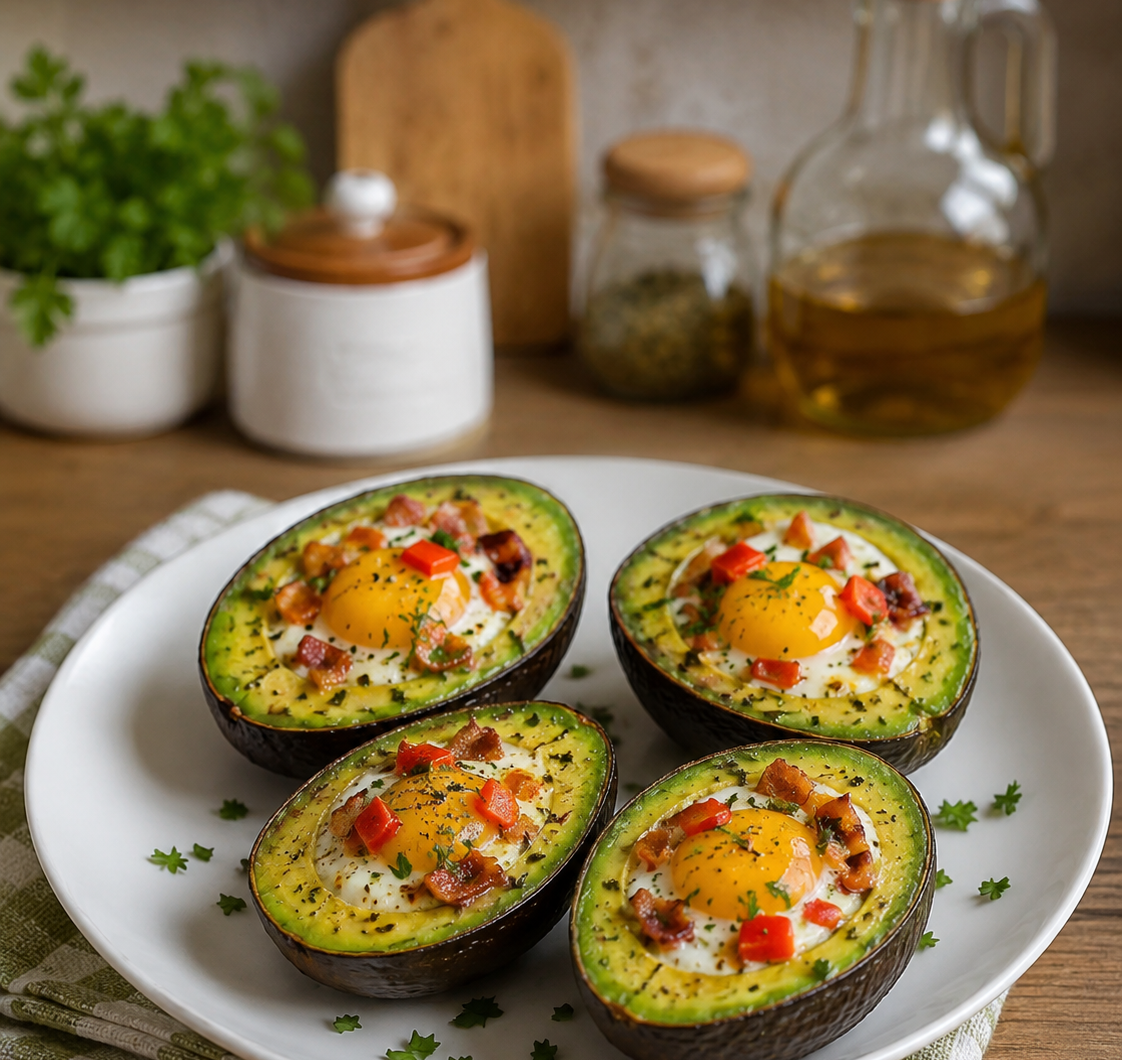
Avocado Egg Cups – Low Carb, Keto, Paleo
Creamy baked avocado halves filled with eggs and seasoned simply with salt and pepper, then topped with optional crispy bacon, red bell pepper, spinach, and fresh herbs.
4
servings10
minutes13
minutes251
kcal23
minutesIngredients
- For the Avocado Egg Cups:
2 avocados, halved with pit removed
4 medium eggs
Salt and pepper to taste
- Optional Toppings:
2 strips of bacon, diced and cooked till crispy
1/2 red bell pepper, finely chopped
1/4 cup spinach, chopped
Chopped fresh herbs for garnish
Directions
- Preheat the oven to 400°F.
- Cover a baking sheet or baking pan with foil or parchment paper to make cleanup easier.
- Cut the avocados in half and remove the pits. Scoop an additional 1–2 tablespoons of avocado flesh from each half to create enough room for the eggs.
- Arrange the avocado halves so they are supported against one another or against the sides of the baking dish. Small ramekins can also be used to help keep them upright.
- Carefully crack one egg into the center of each avocado half. If the avocado cavity is too small, reserve a small amount of the egg white rather than allowing it to overflow.
- Add salt and pepper to taste.
- Bake for approximately 13–18 minutes, until the egg whites are set and the yolks reach your preferred level of doneness.
For softer yolks: Bake for approximately 13–14 minutes.
For medium yolks: Bake for approximately 15–16 minutes.
For firm yolks: Bake for approximately 17–18 minutes. - Remove the baked avocado egg cups from the oven and finish with the crispy bacon, finely chopped red bell pepper, chopped spinach, and fresh herbs.
- Enjoy the avocado egg cups while warm.
Nutrition Facts
- Calories: 251kcal
- Fat: 21g
- Carbohydrates: 9g
- Fiber: 7g
- Sugar: 1g
- Protein: 8g
