
Bread is often one of the first foods people miss when following a ketogenic or low-carb lifestyle. Traditional bread, wraps, tortillas, and flatbreads are usually made with wheat flour, which can add a significant amount of carbohydrates to a meal. Although there are many low-carb bread recipes available, some require specialty ingredients, multiple types of flour, or a long preparation process. This 3-Ingredient Keto Flatbread offers a much simpler alternative. Made with mozzarella cheese, cream cheese, and egg, it creates a soft and flexible bread substitute without wheat flour, yeast, almond flour, or coconut flour.
One of the main reasons this recipe is so useful is its simplicity. There is no kneading, proofing, rolling, or waiting for dough to rise. The cheeses are melted together, combined with an egg, and then cooked in either a frying pan or an oven. The result is a lightly golden, mildly cheesy flatbread that can be used in many different ways. Depending on how it is cooked, it can remain soft enough for wraps or become firm enough to support toppings for a personal keto pizza.
This easy keto flatbread is also practical for busy days. It can be prepared when you need a quick breakfast, a simple lunch, or a low-carb bread alternative for dinner. The same basic recipe can be filled with eggs, chicken, beef, tuna, avocado, cheese, or vegetables. Its versatility makes it a convenient addition to a weekly low-carb meal routine.
Why This Easy Keto Flatbread Works So Well
The success of this recipe comes from the way its three ingredients work together. Mozzarella cheese provides the main structure and creates the stretchy consistency that gives the mixture a dough-like quality. Cream cheese adds softness and richness, helping prevent the mozzarella from becoming too firm after cooking. The egg acts as a binding ingredient and helps the mixture set into a stable flatbread when heat is applied.
Unlike traditional bread, this recipe does not depend on gluten or yeast. There is no need to develop dough structure through kneading or wait for fermentation to take place. Instead, the melted cheese provides the foundation, while the egg helps create a firm but flexible result.
The mixture should be spread evenly before cooking. Keeping the thickness consistent helps the flatbread cook at the same rate. If the centre is much thicker than the edges, the middle may remain soft while the thinner areas become overly browned. A thin, even layer usually produces the best balance between flexibility and structure.
Another helpful step is allowing the flatbread to rest briefly after cooking. While it is extremely hot, it may feel soft and delicate. As the cheese cools, the structure becomes firmer and easier to handle. After a few minutes, it can be folded, sliced, or topped with your preferred ingredients.
What Makes This Flatbread Keto-Friendly?
Traditional flatbread usually contains wheat flour, which is responsible for much of its carbohydrate content. This recipe completely removes flour and replaces it with ingredients that are generally lower in carbohydrates. Mozzarella, cream cheese, and egg provide protein and fat while creating a satisfying bread-like alternative.
The exact nutritional values can vary depending on the brands used. Some shredded cheeses contain anti-caking agents, starches, or other ingredients that may slightly increase carbohydrate content. For anyone closely monitoring net carbohydrates, checking the nutrition label is a useful step.
The fillings and toppings are also important when keeping the final meal low in carbohydrates. Eggs, grilled chicken, beef, tuna, avocado, cheese, spinach, lettuce, cucumber, and other non-starchy vegetables can work well with this flatbread. On the other hand, sweet sauces, regular ketchup, sugary dressings, and heavily processed toppings may increase the carbohydrate content.
The flatbread itself provides a simple base that can be adapted according to your preferred low-carb meal. A breakfast wrap can be made with eggs and cheese, while a lunch version can contain chicken and salad vegetables. The oven-baked version can also become a personal pizza base with low-sugar sauce, cheese, and suitable toppings.
The Role of Mozzarella Cheese
Mozzarella is the main ingredient responsible for the structure of this flourless keto flatbread. When heated, mozzarella becomes soft, stretchy, and cohesive. This allows it to replace some of the structural qualities normally provided by flour-based dough.
Low-moisture mozzarella generally works well because it contains less water than fresh mozzarella stored in liquid. Too much moisture can make the mixture softer and more difficult to spread or cook properly. A block of mozzarella that is shredded shortly before preparation can provide a smooth and consistent texture.
Pre-shredded mozzarella may also work, but some varieties contain ingredients designed to keep the cheese from clumping together. These ingredients can sometimes affect how smoothly the cheese melts. Regardless of which type you use, the cheese should be heated carefully and stirred until it becomes smooth.
Avoid overheating the mozzarella. If the cheese mixture becomes extremely hot, the egg may begin cooking when it is added. The goal is to create a warm and smooth mixture that can be mixed easily with the cream cheese and egg.
Mozzarella also has a relatively mild flavor, which makes this flatbread suitable for many meals. It pairs well with savory fillings without overpowering ingredients such as chicken, beef, eggs, vegetables, or tuna.
Why Cream Cheese Is Important
Cream cheese plays an important role in creating a softer and more flexible flatbread. Mozzarella alone can become firm as it cools, but cream cheese adds richness and tenderness to the mixture.
Only a small amount is needed, yet it can noticeably improve the finished texture. Full-fat cream cheese is commonly used in keto recipes because of its rich consistency, although the nutritional information may vary between brands.
For easier mixing, allowing the cream cheese to soften slightly before heating can be helpful. Cold cream cheese can still be used, but it may require more stirring before it becomes completely smooth.
The mozzarella and cream cheese should be mixed thoroughly after melting. A smooth cheese mixture helps the egg spread evenly throughout the ingredients. If lumps remain, some areas of the flatbread may have a different texture or cook unevenly.
Once the cheeses are fully combined, the mixture should look smooth and stretchy. If it starts to firm before the egg is added, gently warming it for a short time can make it workable again.
How the Egg Holds Everything Together
The egg is the ingredient that helps turn the melted cheese mixture into a stable flatbread. It adds moisture and protein while helping the ingredients bind together during cooking.
The cheeses should be warm but not excessively hot when the egg is added. If necessary, allow the mixture to stand briefly before mixing. Once the egg is added, stir thoroughly until there are no visible streaks remaining.
Proper mixing is important because the egg needs to be evenly distributed throughout the cheese mixture. An uneven mixture may produce weak areas that can tear when the flatbread is lifted or flipped.
As the flatbread cooks, the egg helps the mixture set. Combined with the melted mozzarella, it creates a structure that is firm enough to hold fillings while still remaining flexible when cooked correctly.
Using one large egg provides the intended balance for the recipe. Changing the size significantly may affect the consistency. A smaller egg may provide less moisture and binding, while a larger egg could create a thinner mixture.
How to Make Keto Flatbread in a Frying Pan
The frying pan method is ideal when you want a quick flatbread without heating the oven. A reliable non-stick pan makes the process easier because melted cheese can stick to ordinary surfaces.
Heat the pan over low to medium heat. High heat can cause the bottom to brown too quickly while leaving the centre too soft. Moderate heat allows the egg to set gradually and gives the cheese time to cook evenly.
Spread the prepared mixture into an even circle using the back of a spoon or a silicone spatula. Try to avoid creating a thick centre or extremely thin edges.
Allow the first side to cook without moving it for approximately three to four minutes. Before attempting to flip it, check that the edges have become firm and the underside is lightly golden.
Use a wide spatula to loosen the flatbread carefully. Supporting as much of the surface as possible can reduce the chance of tearing. If the flatbread still feels very soft, allow it to cook for a little longer before turning.
Cook the second side for another three to four minutes, depending on the thickness and heat level. Once both sides are lightly golden and the centre is fully set, remove the flatbread and allow it to rest briefly.
How to Bake Keto Flatbread in the Oven
The oven method is useful when you prefer even cooking and a slightly firmer result. Begin by preheating the oven to 375°F or 190°C. Line a baking tray with parchment paper to prevent the cheese mixture from sticking.
Spread the mixture into a thin and even circle or rectangle. Consistent thickness is important because very thin areas can become crisp before the centre has finished cooking.
Bake the flatbread for approximately 12 to 15 minutes. Cooking times may vary depending on the thickness of the mixture and the oven, so begin checking near the end of the baking time.
The flatbread is ready when the surface looks set and the edges have developed a light golden color. Allow it to cool on the tray for a few minutes before carefully removing it from the parchment.
For a firmer pizza-style base, the flatbread can be cooked slightly longer. However, extended baking will reduce flexibility. If you plan to fold the flatbread as a wrap, avoid baking it until it becomes overly crisp.
Pan Method or Oven Method?
Both methods work well, but the finished texture can be slightly different. The frying pan method is generally faster and is useful when making a quick breakfast or single-serving meal. It can produce a particularly soft and flexible flatbread that works well for wraps.
The oven method takes longer because of the preheating time, but it provides more even heat and does not require flipping. This makes it useful when preparing multiple servings or when you want a firmer result.
For breakfast wraps or sandwiches, the soft pan-cooked version may be the preferred choice. For pizza or an open sandwich with heavier toppings, the oven-baked version may provide better support.
Both methods use the same three original ingredients, so you can choose according to your meal and preferred texture.
Best Ways to Serve 3-Ingredient Keto Flatbread
This versatile flatbread can be used throughout the day. For breakfast, fill it with scrambled eggs, cheese, cooked bacon, or sausage. Let the flatbread cool slightly before adding very hot fillings so it remains easy to fold.
For lunch, use it as a wrap with grilled chicken, turkey, tuna salad, or sliced beef. Add lettuce, spinach, cucumber, avocado, or a small amount of tomato for freshness and texture.
Avoid overfilling the bread or adding excessive amounts of wet dressing. Too much moisture can make the flatbread softer and more difficult to handle.
For dinner, transform the baked flatbread into a personal keto pizza. Once the base is cooked and firm, add a moderate amount of low-sugar pizza sauce, cheese, and your preferred toppings. Return it to the oven until the toppings are heated and the cheese has melted.
It can also be served alongside grilled meats, salads, soups, and low-carb vegetable dishes.
Optional Flavor Ideas
The original three-ingredient recipe has a mild cheesy flavor, making it easy to pair with different meals. If you want additional flavor, dry seasonings can be added in small amounts.
Garlic powder can provide a savory flavor, while oregano or Italian seasoning works well for pizza-style flatbread. Onion powder, black pepper, chili flakes, or a light amount of Parmesan can also add variety.
These additions are optional and are not part of the basic three-ingredient formula. The simplest approach is to prepare the original recipe and change the flavor through fillings and toppings.
For example, the same flatbread can become an egg breakfast wrap, a grilled chicken lunch wrap, or a personal pizza for dinner. This flexibility makes it useful for weekly meal preparation.
Storage, Reheating, and Common Mistakes
Allow leftover flatbread to cool completely before storing it. Place it in an airtight container and refrigerate for up to four days. If stacking several pieces, separate them with parchment paper to prevent sticking.
For longer storage, place cooled flatbreads between sheets of parchment and freeze them in a suitable container for up to two months. Separating them makes it easier to remove one portion at a time.
To reheat, warm the flatbread in a dry non-stick pan over low heat for one to two minutes per side. It can also be reheated briefly in the oven at 350°F or 175°C. For the fastest method, microwave it for approximately 15 to 20 seconds, taking care not to overheat it.
One common mistake is adding the egg to cheese that is too hot. Another is spreading the mixture too thickly, which can leave the centre soft while the edges become overly browned. Cooking at excessively high temperatures can also burn the outside before the middle is fully set.
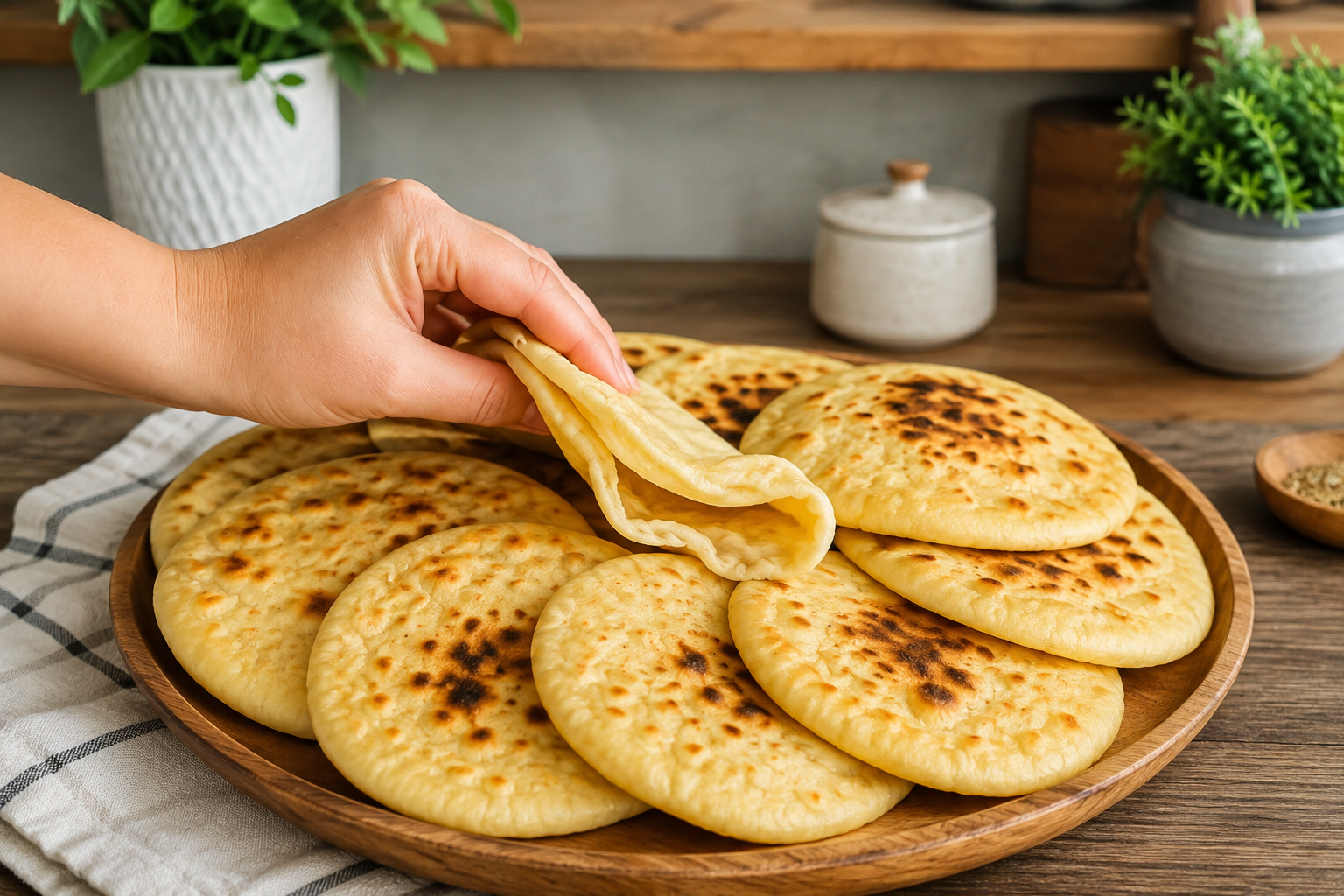
3-Ingredient Keto Flatbread
A soft and flexible low-carb flatbread made with mozzarella, cream cheese, and egg. This quick flourless recipe can be cooked in a frying pan or baked in the oven and used for wraps, sandwiches, breakfast rolls, or a personal keto pizza base.
4
servings5
minutes8
minutes125
kcal13
minutesIngredients
1 cup shredded mozzarella cheese
2 tablespoons cream cheese
1 large egg
Directions
- Melt mozzarella and cream cheese in a microwave-safe bowl.
- Stir the melted cheeses until smooth.
- Add the egg and mix thoroughly.
- Heat a non-stick pan over low-medium heat.
- Spread the mixture into an even circle.
- Cook for 3–4 minutes until the bottom is golden.
- Flip carefully with a wide spatula.
- Cook the second side for 3–4 minutes.
- Cool briefly, slice, and serve.
- Preheat the oven to 375°F (190°C).
- Line a baking tray with parchment paper.
- Melt the mozzarella and cream cheese together.
- Stir until the cheese mixture is smooth.
- Add the egg and mix thoroughly.
- Spread evenly into a thin circle or rectangle.
- Bake for 12–15 minutes until lightly golden.
- Cool briefly before removing from the parchment.
- Slice and serve.
Nutrition Facts
- Calories: 125kcal
- Fat: 10g
- Carbohydrates: 2g
- Protein: 9g
