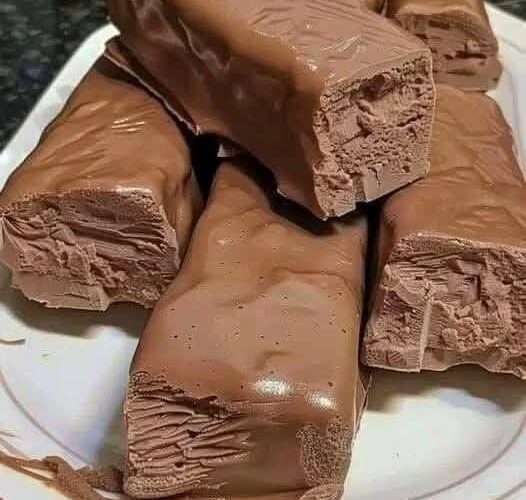
This homemade keto chocolate nougat combines a soft, fluffy center with a smooth chocolate coating. The nougat is prepared with monkfruit sweetener, a sugar-free honey substitute, whipped egg whites, and chocolate pudding mix. Once chilled, it develops a light yet slightly chewy texture that can be sliced into individual bars and finished with a rich chocolate coating.
What Makes This Keto Nougat Special?
Unlike quick no-bake keto candies that depend on cream cheese or whipped toppings, this recipe uses a traditional nougat-style preparation. Whipped egg whites provide the airy foundation, while the cooked sweetener mixture helps create the structure needed for a firm but tender center.
The chocolate pudding mix adds chocolate flavor directly to the nougat while helping create a smooth consistency. After the mixture is thoroughly beaten and chilled, it becomes firm enough to slice while retaining a soft texture.
How the Nougat Texture Comes Together
The texture depends on several stages working together. First, the egg whites are whipped with cream of tartar until firm peaks form. The hot syrup is then slowly incorporated while the mixer continues running.
This process helps stabilize the whipped whites and creates a thick, aerated mixture. Continued mixing allows the nougat to cool gradually while its volume increases and its texture becomes denser without losing its light character.
The Role of the Sugar-Free Pudding Mix
The Simply Delish Chocolate Pudding Mix serves more than one purpose. It gives the nougat a chocolate flavor and contributes to the finished structure.
Because the pudding mix helps manage moisture within the mixture, it supports a nougat that can be chilled and sliced without becoming excessively sticky. Adding it near the end of the mixing process also helps preserve the volume developed during whipping.
Why Syrup Temperature Matters
The syrup must reach 300°F. This temperature is essential for developing the proper candy structure.
A syrup that has not reached the required temperature may leave the nougat too soft or sticky. Excessive heating can produce a harder result. A candy thermometer therefore provides an important level of control and consistency.
Preparing and Whipping the Egg Whites
Room-temperature egg whites are combined with cream of tartar and beaten until firm peaks form. The whipped whites should have enough structure to hold their shape when the mixer is lifted.
This stage creates the airy base of the nougat. The more stable the egg whites are before the syrup is added, the better the final mixture can retain its volume.
Adding the Hot Syrup Correctly
Once the syrup reaches 300°F, it should be added gradually while the mixer runs at medium-high speed.
Pour the syrup in a thin, steady stream over approximately 2–3 minutes. Avoid adding it too quickly. Gradual incorporation allows the hot syrup to blend into the whipped egg whites without overwhelming their structure.
Why Extended Mixing Is Important
After the syrup has been incorporated, the mixture should continue beating for 15–20 minutes.
During this period, the mixture gradually cools and becomes thicker. It also becomes lighter in appearance as air remains distributed throughout the nougat.
Stopping too early can leave the mixture overly loose or dense. Giving it the full mixing time helps create the characteristic fluffy texture.
Incorporating the Chocolate Pudding Mix
Once the nougat has developed its thick consistency, reduce the mixer to its lowest setting and slowly add the Simply Delish Chocolate Pudding Mix.
Mix only until incorporated. Then stop the mixer and gently fold the mixture with a spatula. This final hand-folding stage helps distribute the pudding mix while avoiding unnecessary loss of volume.
Preparing the Pan for the Nougat
Line a 9×5 bread pan with parchment paper before beginning. Leave enough parchment hanging over the sides to make removal easier.
Nougat can be sticky, so lightly oiling your hands and utensils makes shaping much easier.
Shaping and Smoothing the Nougat
Transfer the prepared nougat to the lined pan. Lightly grease your hands and press the mixture into an even layer.
Place another sheet of parchment over the surface and gently smooth the top. Creating an even slab at this stage makes the finished bars easier to cut into consistent portions.
Why Overnight Chilling Matters
The nougat should be refrigerated overnight or until completely firm. Although it may appear set soon after preparation, the structure needs additional time to stabilize.
Overnight refrigeration produces a firmer slab that is easier to remove from the pan and cut into bars. It also helps the finished center develop the intended texture.
How to Cut Clean Nougat Bars
Once chilled, loosen the edges with a lightly greased knife. Remove the nougat slab and place it on a cutting board.
Cut the slab into 6 equal bars. Because nougat can stick to a knife, lightly grease the blade as needed during cutting.
Keeping the portions similar in size also makes the chocolate coating more even.
Making the Chocolate Coating
The chocolate coating is prepared from unsweetened chocolate baking bits, confectioners erythritol, liquid monkfruit, and liquid coconut oil.
Melt these ingredients together over low heat, stirring continuously. The goal is to create a smooth coating without overheating the chocolate.
Low heat is particularly important because chocolate can scorch when exposed to excessive temperatures.
Coating the Nougat Bars
Arrange the chilled nougat bars on a wire rack or parchment-lined tray. Spoon or pour the melted chocolate over each bar and allow the excess to drip away.
After the coating sets, the bars can be turned over and coated on the opposite side. If preferred, coat only the top and sides for a simpler preparation.
Allow the chocolate to become completely firm before serving or storing.
Tips for Consistent Results
Prepare all ingredients before beginning. Candy making involves several time-sensitive stages, so measuring everything in advance makes the process smoother.
Use room-temperature egg whites and whip them until firm peaks develop. Monitor the syrup carefully as it approaches 300°F, since the temperature can increase quickly.
Most importantly, add the syrup slowly and continue mixing for the full 15–20 minutes. These steps have a significant effect on the final texture.
Lightly oil tools that touch the nougat to reduce sticking.
Common Mistakes to Avoid
Not reaching 300°F:
The syrup may not create enough structure if it is removed from the heat too soon.
Pouring the syrup too quickly:
A rapid addition can interfere with the volume of the whipped egg whites.
Reducing the mixing time:
The nougat may remain too loose or dense if it is not mixed long enough.
Skipping the overnight chill:
Cutting the nougat before it has fully set can result in messy or uneven pieces.
Using excessive heat for the chocolate:
High heat can scorch the chocolate or negatively affect its texture.
Proper Storage
Store the finished chocolate nougat bars in an airtight container in the refrigerator. If stacking the pieces, place parchment paper between the layers to prevent the chocolate coating from sticking.
The bars can be stored for up to 7 days under refrigeration.
For a softer eating texture, remove a bar from the refrigerator and let it sit at room temperature for several minutes before serving.
Serving Suggestions
These homemade keto chocolate nougat bars work well as an afternoon snack, after-dinner dessert, or small homemade treat.
For gifting, wrap individual bars in parchment paper or food-safe candy wrappers. Smaller pieces can also be prepared by dividing the six bars into bite-sized portions.
Because the candy combines a sweet chocolate exterior with a soft nougat center, small servings can provide a satisfying dessert experience.
Recipe Details
Prep Time: 10 minutes
Cook Time: 45 minutes
Cooling Time: 8 hours
Total Time: 8 hours 55 minutes
Course: Dessert
Cuisine: American
Servings: 6 bars
Calories: 22 kcal per bar
Equipment
- 9×5 bread pan
- Parchment paper
- Candy thermometer
- Electric mixer
- Large mixing bowl
- Medium saucepan
- Large nonstick pot
- Spatula
- Sharp knife
Ingredients
Chocolate Nougat
- 1 cup monkfruit sweetener
- 3/4 cup sugar-free honey substitute
- 1 tablespoon water
- 1 teaspoon vanilla extract
- 2 large egg whites, room temperature
- 1/3 cup Simply Delish Chocolate Pudding Mix
- 1/4 teaspoon cream of tartar
Chocolate Coating
- 1 cup unsweetened chocolate baking bits (or 8 ounces unsweetened chocolate)
- 3 tablespoons confectioners erythritol
- 10 drops liquid monkfruit
- 1 tablespoon liquid coconut oil
Instructions
1. Prepare the Pan
Line a 9×5 bread pan with parchment paper, allowing the paper to extend over the sides. Set aside.
2. Cook the Syrup
Add the monkfruit sweetener, sugar-free honey substitute, water, and vanilla extract to a large nonstick pot.
Cook over medium heat, stirring continuously until the sweetener dissolves. Continue cooking until the mixture reaches 300°F on a candy thermometer.
3. Whip the Egg Whites
While the syrup cooks, place the room-temperature egg whites and cream of tartar in a large mixing bowl.
Beat with an electric mixer until firm peaks form.
4. Add the Hot Syrup
With the mixer running at medium-high speed, slowly pour the hot syrup into the whipped egg whites.
Add the syrup in a thin stream over approximately 2–3 minutes.
Continue beating for 15–20 minutes, or until the mixture becomes lighter, thicker, and fluffy.
5. Add the Pudding Mix
Reduce the mixer to its lowest speed. Slowly add the Simply Delish Chocolate Pudding Mix.
Mix just until incorporated. Stop the mixer and gently fold with a spatula until evenly blended.
6. Shape the Nougat
Transfer the mixture to the prepared pan.
Lightly grease your hands with oil and press the nougat into an even layer. Cover the surface with another sheet of parchment paper and smooth gently.
7. Chill Overnight
Refrigerate the nougat overnight or until completely firm.
8. Slice the Bars
Use a lightly greased knife to loosen the edges. Remove the nougat from the pan and transfer it to a cutting board.
Cut into 6 equal bars, greasing the knife as necessary.
9. Make the Chocolate Coating
Combine the unsweetened chocolate baking bits, confectioners erythritol, liquid monkfruit, and liquid coconut oil in a medium saucepan.
Melt over low heat, stirring continuously until smooth.
10. Coat the Bars
Place the nougat bars on a wire rack or parchment-lined tray.
Pour or spoon the melted chocolate over the bars. Let the excess chocolate drip away.
Once the coating has set, turn the bars over and coat the opposite side if desired. You may also coat only the top and sides.
11. Set and Serve
Refrigerate the finished bars until the chocolate is completely set.
Allow the bars to stand at room temperature for several minutes before serving.
Notes
- A candy thermometer is recommended for accurate syrup temperature.
- The syrup should reach 300°F.
- Add the hot syrup slowly over 2–3 minutes.
- Beat the nougat mixture for the full 15–20 minutes.
- Lightly oil your hands and knife when working with the sticky nougat.
- Refrigerate the nougat overnight before slicing.
- Melt the chocolate over low heat to avoid scorching.
- Store the finished bars in an airtight container in the refrigerator.
- Separate stacked bars with parchment paper.
- Refrigerated bars can be stored for up to 7 days.
Nutrition
Per bar:
- Calories: 22 kcal
- Carbohydrates: 6 g
- Protein: 0.04 g
- Fat: 2 g
- Saturated Fat: 2 g
- Polyunsaturated Fat: 0.04 g
- Monounsaturated Fat: 0.1 g
- Sodium: 1 mg
- Potassium: 22 mg
- Sugar: 0.1 g
- Calcium: 0.1 mg
- Iron: 0.01 mg
