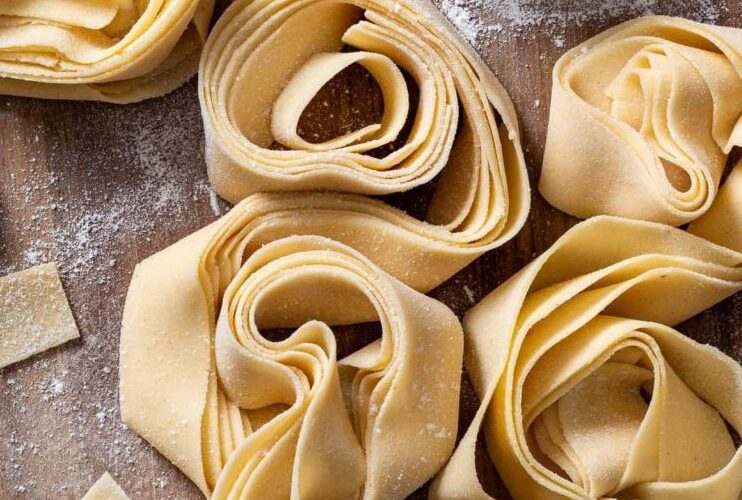
If you’ve ever missed the taste and texture of fresh, homemade pasta since going gluten free, this recipe will change everything. This simple gluten-free pasta dough comes together quickly, rolls out beautifully, and cooks into tender, silky pasta that tastes just like the traditional wheat version. Even people who don’t eat gluten free are usually shocked when they find out.
The dough is made with just three everyday ingredients and can be rolled by hand or with a pasta machine. It’s sturdy enough for shapes like tagliatelle and pappardelle, yet delicate enough for ravioli, lasagna sheets, or tortellini. Once you try it, store-bought gluten-free pasta will feel like a compromise you no longer need to make.
Why This Gluten-Free Pasta Works
Gluten-free pasta can be tricky, but this recipe is designed to be reliable and flexible. The flour blend provides structure, the eggs add richness and elasticity, and the xanthan gum replaces gluten’s binding power. The result is a dough that’s smooth, pliable, and easy to work with — not crumbly, sticky, or fragile.
Because different gluten-free flour blends absorb moisture differently, the recipe allows for small adjustments. This makes it adaptable no matter which blend you prefer to use.
Ingredients for Gluten-Free Pasta
You only need a handful of pantry staples:
- Gluten-free flour blend
Use a good-quality all-purpose gluten-free flour. Both store-bought “1-to-1” blends and homemade blends work well. Since absorption varies between brands, you may need a small adjustment in flour or egg. - Xanthan gum
This is essential for elasticity and structure. It keeps the dough flexible enough to roll thin and prevents cracking or tearing. If your flour blend already contains xanthan gum, reduce the amount accordingly. - Eggs
Eggs bind the dough and give the pasta its classic flavor and richness. The yolks add tenderness, while the whites improve stretch and strength. - Optional: olive oil
A small amount of oil makes the dough extra smooth, but it’s not required.
How to Make Gluten-Free Pasta Dough
- In a bowl, combine the gluten-free flour blend and xanthan gum.
- Create a well in the center and add the eggs (and olive oil, if using).
- Mix until the dough starts to come together and looks shaggy.
- Transfer the dough to a lightly floured surface and knead for 2–3 minutes, until smooth and uniform.
The finished dough should feel firm but pliable, smooth to the touch, and form a ball without cracking. It should not feel sticky.
Adjusting the Dough
- If the dough feels dry or crumbly, add a little beaten egg, a teaspoon at a time.
- If it feels too soft or sticky, sprinkle in more flour until manageable.
Rolling Out Gluten-Free Pasta
This recipe makes enough dough for about four nests of fresh pasta. Divide the dough into four equal portions and keep the pieces you’re not using covered so they don’t dry out.
You can roll the dough by hand or with a pasta machine.
Preparing the Dough Sheets
- Roll one portion of dough into a rough rectangle using a rolling pin.
- Fold it into thirds (like a letter), rotate it 90 degrees, and roll it out again.
- Feed it through the widest setting of your pasta machine.
- Fold, rotate, and pass it through the widest setting one more time.
This process smooths the dough and strengthens its structure. Trim rough edges if needed to create a neat sheet.
Thinning the Pasta
Gradually reduce the machine setting, passing the dough twice through each level before moving thinner. Lightly dust with flour if the dough starts sticking.
For most shapes:
- Medium thickness works well for tagliatelle and pappardelle
- Slightly thinner sheets are ideal for filled pasta like ravioli
Minor cracks along the edges are normal for gluten-free dough and won’t affect the final result.
Cutting and Shaping
Once the dough reaches your desired thickness:
- Cut by hand with a sharp knife, or
- Use the cutter attachment on your pasta machine
Dust the cut pasta generously with flour and gently shape into nests to prevent sticking.
If you’re new to homemade pasta, long shapes like fettuccine or tagliatelle are the easiest place to start.
Cooking Fresh Gluten-Free Pasta
Bring a large pot of well-salted water to a rolling boil. Add the pasta and cook for 4–6 minutes, depending on thickness and desired texture.
Fresh gluten-free pasta cooks quickly, so keep an eye on it and taste early.
Storing Gluten-Free Pasta
Refrigeration
- Dust the pasta well with flour
- Store in an airtight container
- Keep refrigerated for up to 24 hours
Freezing
- Arrange floured pasta in a single layer on a baking sheet
- Freeze until firm (about 1 hour)
- Transfer to a freezer bag and store for up to 1 month
Cook directly from frozen, adding 1–2 extra minutes to the cooking time.
Drying Note
Because this dough contains a high proportion of eggs, air-drying is not recommended. Improper drying can lead to spoilage. For best results, cook fresh or store chilled or frozen.
Final Thoughts
This homemade gluten-free pasta proves that going gluten free doesn’t mean giving up real pasta. It’s smooth, tender, satisfying, and versatile — everything you want from fresh pasta, without the gluten. Once you make it yourself, it’s hard to go back.
