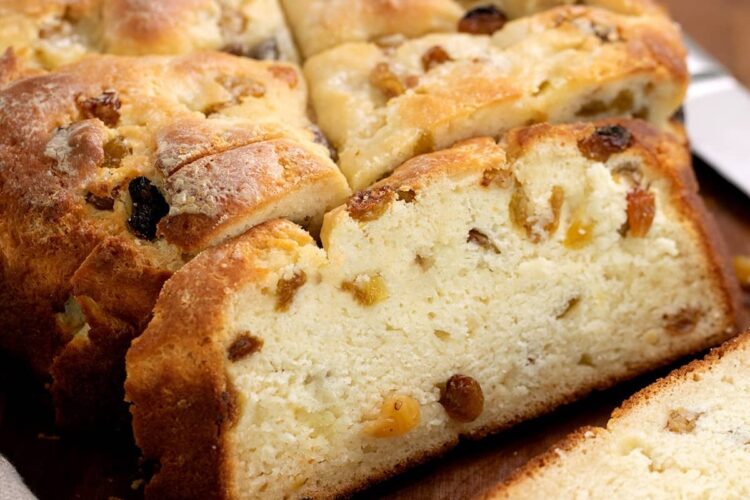
This gluten-free Irish soda bread is a soft, lightly sweet quick bread with a golden crust and tender crumb. Traditionally served with butter, it is especially popular during St. Patrick’s Day, but it can be enjoyed any time of the year.
Unlike yeast bread, Irish soda bread rises using baking soda and acidic buttermilk. The result is a rustic round loaf with a slightly crumbly texture and a rich, buttery taste. This gluten-free version recreates the classic flavor and texture while remaining light enough to slice easily.
Studded with sweet raisins and baked with cold butter, the bread develops a delicate interior and a crisp outer crust. Whether served warm with butter or toasted the next day, it makes a comforting and satisfying treat.
Why This Recipe Works
Irish soda bread is a unique type of bread. It isn’t made with yeast, and it’s not baked like typical quick breads in loaf pans. Instead, the dough is shaped into a round and baked directly in a pan or skillet.
This recipe treats the dough almost like pastry dough. Cold butter pieces are mixed into the dry ingredients so that they melt slowly during baking, creating steam and helping the bread rise. Chilled buttermilk keeps the dough tender while activating the baking soda.
The result is bread that is:
- Light and tender
- Slightly sweet
- Buttery and flavorful
- Easy to slice
- Perfect for serving warm with butter
Ingredients
Dry Ingredients
- 4 cups gluten-free all-purpose flour blend
- 2 teaspoons xanthan gum (omit if already in the flour blend)
- 2¼ teaspoons baking powder
- 1 teaspoon baking soda
- ½ teaspoon salt
- ¼ teaspoon cream of tartar
- ¾ cup granulated sugar
Fat and Fruit
- 6 tablespoons unsalted butter (very cold)
- 1½ cups raisins or currants
Wet Ingredients
- 2 eggs, beaten
- 1½ cups cold buttermilk
Ingredient Purpose
Gluten-Free Flour Blend
Provides the structure of the bread. A balanced blend with rice flour works best.
Baking Soda and Baking Powder
These act as leavening agents that help the bread rise.
Cream of Tartar
Works with baking soda and buttermilk to create lift while adding a mild tangy flavor.
Sugar
Adds sweetness and helps keep the crumb soft and moist.
Butter
Cold butter melts during baking, producing steam that creates a light texture and crisp crust.
Raisins
Add sweetness, moisture, and traditional flavor.
Buttermilk
Provides acidity needed to activate baking soda and adds richness.
Eggs
Bind the dough together and help the loaf maintain its shape.
Step-by-Step Instructions
1. Preheat the Oven
Set the oven to 375°F (190°C).
Grease and line a 9-inch round baking pan or a cast-iron skillet with parchment paper.
2. Mix the Dry Ingredients
In a large mixing bowl, whisk together:
- gluten-free flour blend
- xanthan gum
- baking powder
- baking soda
- salt
- cream of tartar
- granulated sugar
Mix thoroughly so the leavening agents are evenly distributed.
3. Add the Butter
Using a coarse grater, grate the very cold butter directly into the flour mixture.
Alternatively, cut the butter into small cubes and press each piece flat between your fingers.
Gently toss the butter pieces through the flour until evenly coated.
4. Add the Raisins
Stir in the raisins or currants.
The mixture will look dry and crumbly at this stage.
5. Mix the Wet Ingredients
In a measuring cup or small bowl, whisk together:
- beaten eggs
- chilled buttermilk
Mix until the eggs are fully blended with the buttermilk.
6. Combine Wet and Dry Ingredients
Make a well in the center of the dry mixture.
Pour the buttermilk mixture into the well and stir gently until a soft dough forms.
If the dough feels dry in certain areas, add a small amount of buttermilk one tablespoon at a time until it comes together.
7. Shape the Dough
Transfer the dough to a lightly floured surface.
Gently shape it into a round disk about 9 inches wide.
Keep the center slightly higher than the edges.
Handle the dough lightly to keep the butter cold.
8. Score the Top
Using a sharp knife, cut a deep X shape across the top of the loaf.
Each cut should be about 1 inch deep and several inches long.
This allows heat to escape and helps the bread bake evenly.
9. Bake
Place the dough in the prepared pan or skillet.
Bake in the preheated oven for about 45 minutes, or until:
- the crust is golden brown
- the loaf feels firm in the center
- a toothpick inserted in the middle comes out with a few moist crumbs
Cast-iron pans may bake the bread slightly faster.
10. Cool and Serve
Allow the bread to cool in the pan for about 10 minutes.
Transfer it to a wire rack and let it cool completely before slicing.
Serve warm with butter for the best flavor.
Expert Baking Tips
Keep Ingredients Cold
Cold butter and buttermilk help create a lighter texture.
Handle the Dough Gently
Overworking the dough can melt the butter and make the bread dense.
Score the Bread Deeply
A deep cross cut prevents the bread from cracking unevenly during baking.
Use Real Buttermilk
True buttermilk is thicker than milk and provides the right balance of acidity and moisture.
Ingredient Substitutions
Dairy-Free Option
Replace butter with vegan butter.
For buttermilk, mix:
- ½ nondairy yogurt
- ½ nondairy milk
Egg-Free Option
Replace each egg with:
- chia egg
- flax egg
- egg replacer
Raisin Alternatives
Instead of raisins you can use:
- currants
- chopped dried apricots
- chopped prunes
- walnuts or pecans
If skipping dried fruit entirely, the loaf may bake slightly faster.
Storage Instructions
Room Temperature
Wrap the bread tightly and store for up to 2 days.
Lightly toast slices to refresh them.
Freezing
Slice the loaf before freezing.
Wrap slices tightly and freeze for up to 3 months.
Thaw at room temperature or toast directly from frozen.
Nutrition (Per Slice – Approximate)
- Calories: 420
- Carbohydrates: 79 g
- Protein: 5 g
- Fat: 9 g
- Fiber: 4 g
- Sugar: 17 g
Values are estimates and may vary depending on ingredients.
