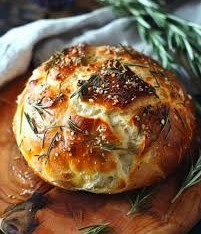
If you’ve ever dreamed of pulling a warm, golden loaf from your own oven — the kind with a crackly crust and soft, airy centre you’d expect from a European bakery — this rustic rosemary garlic bread is the recipe to try.
There’s no kneading, no mixer, and no complicated techniques. Time does most of the work for you, transforming a simple mixture of flour, water, yeast, garlic, and rosemary into a deeply flavourful loaf with incredible texture. As it bakes, your kitchen fills with the unmistakable aroma of roasted garlic and fresh herbs — the kind of smell that makes everyone wander in asking, “What’s in the oven?”
Serve it alongside soups, stews, pasta, or simply tear off chunks and dip them into olive oil and balsamic vinegar. This is comfort food at its simplest and most satisfying.
Why This Bread Works
- No kneading required
- Crisp, golden crust with a chewy interior
- Infused with garlic and rosemary throughout
- Uses basic pantry ingredients
- Beginner-friendly but bakery-worthy
No-Knead Rosemary Garlic Bread (Classic)
Ingredients
- 3 cups all-purpose flour
- 1½ teaspoons salt
- 2 teaspoons instant yeast
- 1 teaspoon sugar
- 1 cup warm water (not hot)
- 2 tablespoons olive oil
- 1–2 tablespoons fresh rosemary, finely chopped
(or 1 teaspoon dried) - 3–4 garlic cloves, minced
Optional topping
- Extra olive oil
- Fresh rosemary
- Coarse sea salt
How to Make No-Knead Rosemary Garlic Bread
1. Activate the Yeast
In a large bowl, mix the warm water, sugar, and yeast. Let sit for about 5 minutes until slightly foamy — this means the yeast is active and ready.
2. Mix the Dough
Add the flour, salt, olive oil, rosemary, and garlic to the bowl. Stir until everything comes together into a sticky, shaggy dough. No kneading needed — just make sure there are no dry patches of flour.
3. First Rise
Cover the bowl with a clean towel or plastic wrap and let the dough rise at room temperature for about 1 hour, or until doubled in size.
4. Shape the Loaf
Turn the dough out onto a lightly floured surface. Gently shape it into a round or oval loaf, being careful not to knock out too much air.
Place on a lined baking tray or into a floured proofing basket. Brush lightly with olive oil and sprinkle with extra rosemary and coarse salt if desired.
5. Second Rise
Cover loosely and let rise for another 20–30 minutes, until slightly puffed.
6. Bake
Preheat your oven to 220°C (425°F). Bake the loaf for 25–30 minutes, until deeply golden and hollow-sounding when tapped underneath.
7. Cool
Let cool for at least 10 minutes before slicing to allow the crumb to set.
Serving Ideas
This rosemary garlic bread is incredibly versatile:
- Serve warm with butter or olive oil
- Pair with soups, stews, or pasta dishes
- Use for sandwiches or panini
- Toast leftovers for garlic bread or bruschetta
It’s especially good alongside tomato-based soups and creamy dishes, where the garlic and herbs really shine.
Gluten-Free Rosemary Garlic Bread (Easy & Soft)
This gluten-free version is soft, fluffy, and full of flavour — no kneading required. The dough is more like a thick batter, which makes it easy and reliable, even if you’re new to gluten-free baking.
Ingredients (Gluten-Free)
- 2 cups gluten-free all-purpose flour (with xanthan gum)
- 1 tablespoon sugar
- 1 teaspoon salt
- 1 tablespoon instant yeast
- 1 cup warm water
- 2 eggs, room temperature
- 3 tablespoons olive oil
- 1 tablespoon chopped fresh rosemary
- 2–3 garlic cloves, minced
How to Make Gluten-Free Rosemary Garlic Bread
- In a bowl, whisk together the gluten-free flour, sugar, salt, and yeast.
- Add the warm water, eggs, olive oil, garlic, and rosemary.
- Beat well for 2–3 minutes until smooth and thick.
- Transfer the batter to a greased loaf tin and smooth the top.
- Cover and let rise for 25–30 minutes, until slightly puffy.
- Bake at 190°C (375°F) for 35–40 minutes, until golden and firm.
- Cool completely before slicing for best texture.
Storage Tips
- Store bread wrapped in a cloth or bread bag at room temperature for 2–3 days
- Slice and freeze for longer storage (up to 2 months)
- Toast directly from frozen for best results
- Avoid plastic wrap, which softens the crust
